Buying guide
Dog bed for a Labrador: size, orthopedic foam, chew-resistant and washable
Measure your Lab, match the bed to how it sleeps, and pick foam and a cover that can take the weight, the hair and the occasional muddy paw.
Published
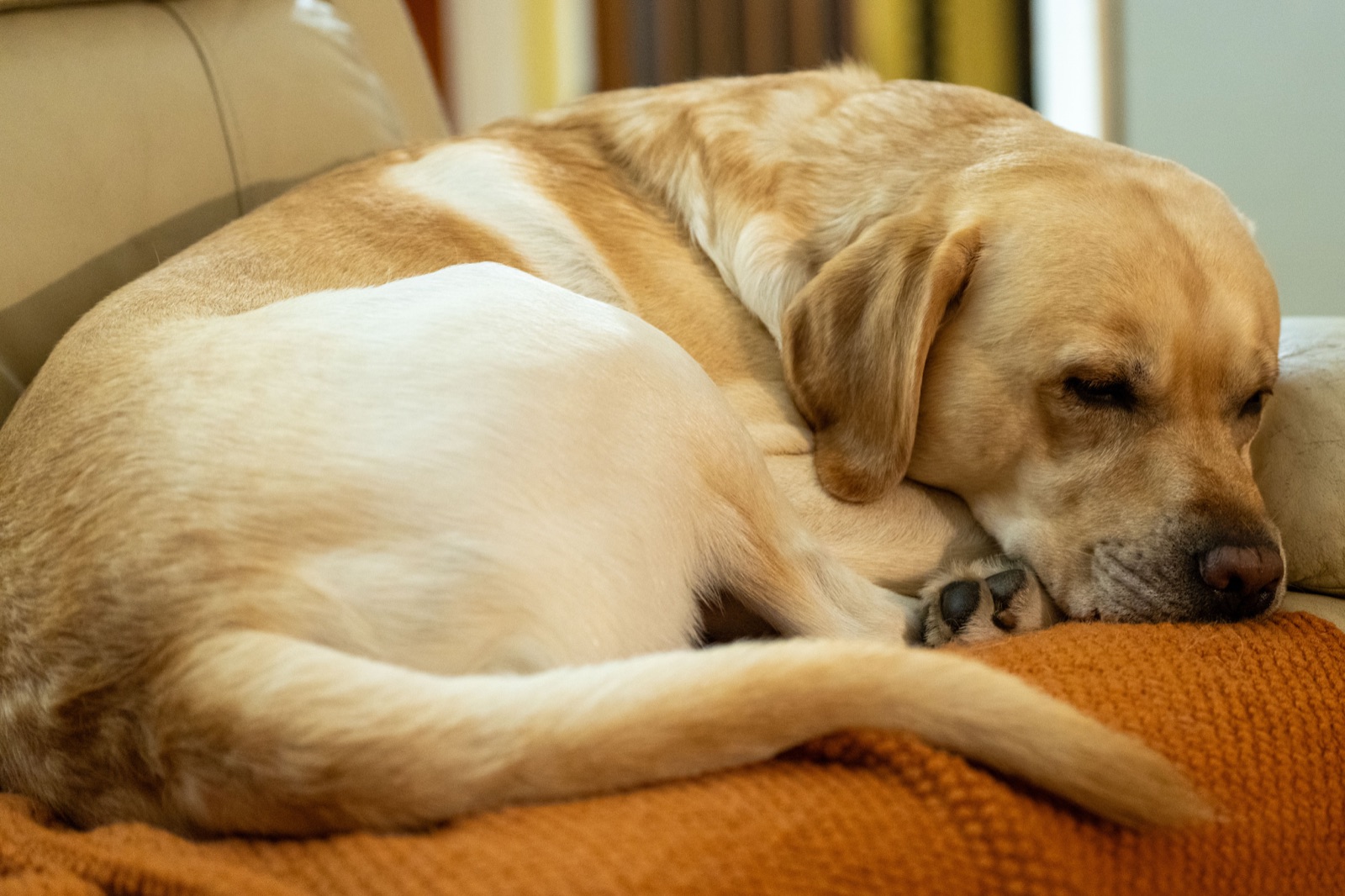
A dog bed for a Labrador has to carry 55–80 lb of dog, cope with a coat that sheds all year, and survive the odd chewing session and the dog coming in wet from the yard. A bed that is too small or too thin flattens out and your Lab ends up on the floor. This guide covers bed size for a Labrador Retriever, the main bed types, when orthopedic foam is worth it, chew resistance, and covers you can actually keep clean.
What a good bed does for a Lab
The AKC says a bed should be the right size for your dog and that large dogs naturally need bigger beds. For a Lab, a good bed also does three quieter jobs:
- Support. A heavy dog presses thin stuffing flat. Solid foam spreads the weight, which matters more as your Lab ages.
- A place of its own. A bed in a set spot gives your dog somewhere to settle that isn't your sofa.
- Hair and dirt control. Hair and mud go into a washable cover instead of the carpet.
Bed size for a Labrador Retriever
How to measure
Chewy's bed sizing guide describes two measurements:
- Length: from the tip of the nose to the base of the tail (leave the tail out).
- Width: across the widest part of the body, usually shoulder to shoulder.
Compare these with the bed's sleeping surface, not the outside dimensions; bolsters take up room. If your dog falls between two sizes, Chewy's advice is to choose the bigger bed.
Match the bed to how your Lab sleeps
Chewy groups dogs into three sleep styles:
- Sprawlers stretch out flat and need a large rectangular or pillow-style bed.
- Curlers sleep in a tight ball and do well in most styles, including round beds.
- Leaners like to rest against something and suit bolster beds.
Watch your Lab for a few nights before you buy. Orvis gives the same advice: watch your dog while it sleeps.
Example sizes
Makers size beds differently, so always read the chart for the bed you want. As an example, the Orvis size guide lists these for Labrador Retrievers:
| Orvis bed style | Size | Dimensions | Dog weight |
|---|---|---|---|
| Deep dish | Large | 44" × 31" | 60–90 lb |
| Round | Large | 41" diameter | 45–70 lb (smaller Labs) |
| Rectangle | Medium | 36" × 24" | 40–70 lb (smaller Labs) |
A large, sprawling adult Lab usually needs the bigger end of these ranges.
Types of dog beds for Labs
Orthopedic foam bed
A flat slab of solid foam, often memory foam, with a removable cover. The AKC says many dogs, not just seniors, can benefit from orthopedic beds. For older dogs it recommends a thick, solid piece of polyurethane foam or memory foam, and notes that memory foam molds to the dog's body and, being denser, doesn't need to be as thick as polyurethane to give comparable support. Chewy adds that older dogs or dogs with joint issues may do better on firm memory foam, while shredded or thin foam may not give enough support.
Bolster bed
A cushion with raised sides. Good for leaners and for dogs that like to rest their head on something. Check the inside measurement, since the bolsters take up part of the length.
Pillow bed
A big, soft cushion. Comfortable for sprawlers, but loose fill can flatten under a heavy dog. Look for a firm core and a cover that unzips.
Elevated cot
A fabric sling stretched over a frame, raised off the floor. The AKC says cot-style beds can help keep dogs cool and support their joints, and that an elevated cot can be easy for a senior dog to get on and off. Kuranda describes the heavy-duty vinyl it offers on its cots as easy to clean, which suits a Lab that comes in wet.
Crate pad
A thin, washable mat cut to the crate's floor. Chewy notes a crate bed should fit neatly inside the crate. For crate sizes, see our dog crate guide.

Comparison table
| Type | Best for | Support for a heavy dog | Easy to clean | Chew resistance |
|---|---|---|---|---|
| Orthopedic foam | Adults, seniors, sprawlers | High | Removable cover | Low to medium |
| Bolster | Leaners, curlers | Medium | Removable cover | Low |
| Pillow | Sprawlers | Varies with the fill | Removable cover | Low |
| Elevated cot | Warm homes, wet dogs, seniors | Even, off the floor | Wipe-clean fabrics available | Higher on chew-resistant frames |
| Crate pad | Puppies, crate time | Low | Machine wash | Low |
What to look at before you buy
Orthopedic and memory foam for heavy and older Labs
The heavier your Lab, and the older it gets, the more the foam matters. Press the bed with your fist: if you can feel the floor through it, a 70 lb dog will too. Read the product's foam type and thickness, and remember the AKC's point that dense memory foam can be thinner than polyurethane for the same support.
Chew resistance
Most Labs chew, especially young ones. No comfortable bed is chew proof: Kuranda, which builds elevated beds for chewers, says so in its own buying guide. Its design removes the parts dogs start on: the fabric edges are sealed into the frame rails and corners, screw heads are recessed, and there is no stuffing to swallow. If your Lab tears up cushions, an elevated cot with enclosed edges is the type to look at, together with plenty of approved chew toys (see our chew toy guide).
Washable and waterproof covers
The AKC recommends a bed with a removable cover you can wash weekly, and says a machine-washable bed or a waterproof removable cover is ideal. For a Lab, a waterproof liner under the cover protects the foam from wet coats and puppy accidents, and a removable cover handles the hair.
Which type suits whom
- Lab puppy: a cheap, washable crate pad until the chewing phase passes.
- Young adult that chews: an elevated cot with enclosed fabric edges.
- Healthy adult that sprawls: a large orthopedic foam bed or pillow bed sized to its full stretched length.
- Senior Lab or heavy Lab: a thick memory foam or solid foam bed, or a low cot that is easy to step onto.
- Lab in a warm home: an elevated cot, which the AKC notes can help keep dogs cool.
How to use and care for a Lab bed
Day-to-day care
Placement
Put the bed where your Lab already likes to lie, away from drafts and heaters. For an older dog, the AKC suggests non-slip rugs or mats on slippery floors on the way to it.
Cleaning
Vacuum hair off the cover every few days during shedding season, wash the cover weekly as the AKC suggests, and dry the foam fully before putting the cover back. Follow the care label on your bed.
When to replace
Replace foam that stays flattened where your dog lies, and any bed with torn seams or exposed stuffing before your Lab eats it.
Browse more Lab-sized gear in the gear section, and see the health section for when stiffness or reluctance to lie down is worth a vet visit.
Questions
What size bed does a Labrador need?
Measure your Lab from nose to the base of the tail and across the shoulders, then compare with the sleeping surface of the bed. As one maker's example, Orvis lists its large deep-dish bed (44 by 31 inches, for dogs of 60–90 lb) for Labrador Retrievers. If your dog falls between sizes, choose the bigger bed.
Do Labradors need an orthopedic bed?
Not every Lab needs one, but a heavy dog benefits from solid support. The AKC says many dogs, not just seniors, can benefit from orthopedic beds, and recommends a thick, solid piece of polyurethane or memory foam for older dogs.
Is there a chew-proof dog bed for a Lab?
Not truly. Even Kuranda, which makes chew-resistant elevated beds with the fabric edges enclosed in the frame, says no bed designed to be comfortable is truly chew proof if a dog is persistent enough.
How often should I wash my Lab's bed?
The AKC suggests a bed with a removable cover you can toss in the wash weekly. A machine-washable or waterproof removable cover is ideal for a dog that sheds and gets muddy.
What bed is good for a Lab puppy?
An inexpensive, washable pad that fits the crate, since puppies have accidents and chew. Buy the adult bed once your Lab has stopped destroying bedding.
Sources
- American Kennel Club — The importance of a good dog bed
- American Kennel Club — Senior dog comfort: making your home more accessible
- Chewy — How to choose the best dog bed size for your pup
- Orvis — Dogs fit guide (dog product size information)
- Kuranda — Chew proof dog beds buyer's guide
More in Gear
Buying guide
Dog crate for a Labrador: what size, which type, and a divider for puppies
Measure your dog, buy for the adult size, and use a divider panel while your Lab is still a puppy.
Guide in Health
Labrador hip dysplasia: signs, screening and what owners can do
Hip dysplasia is mostly inherited, but growth rate and body weight shape how much it affects a Lab. Here is what to watch for and what to ask a breeder.
Buying guide
Chew toys for Labs: safe materials, the right size and what vets warn against
A Lab will chew something. Give it a toy that is big enough not to swallow and soft enough not to break a tooth.