Guide
Labrador hip dysplasia: signs, screening and what owners can do
Hip dysplasia is mostly inherited, but growth rate and body weight shape how much it affects a Lab. Here is what to watch for and what to ask a breeder.
Published
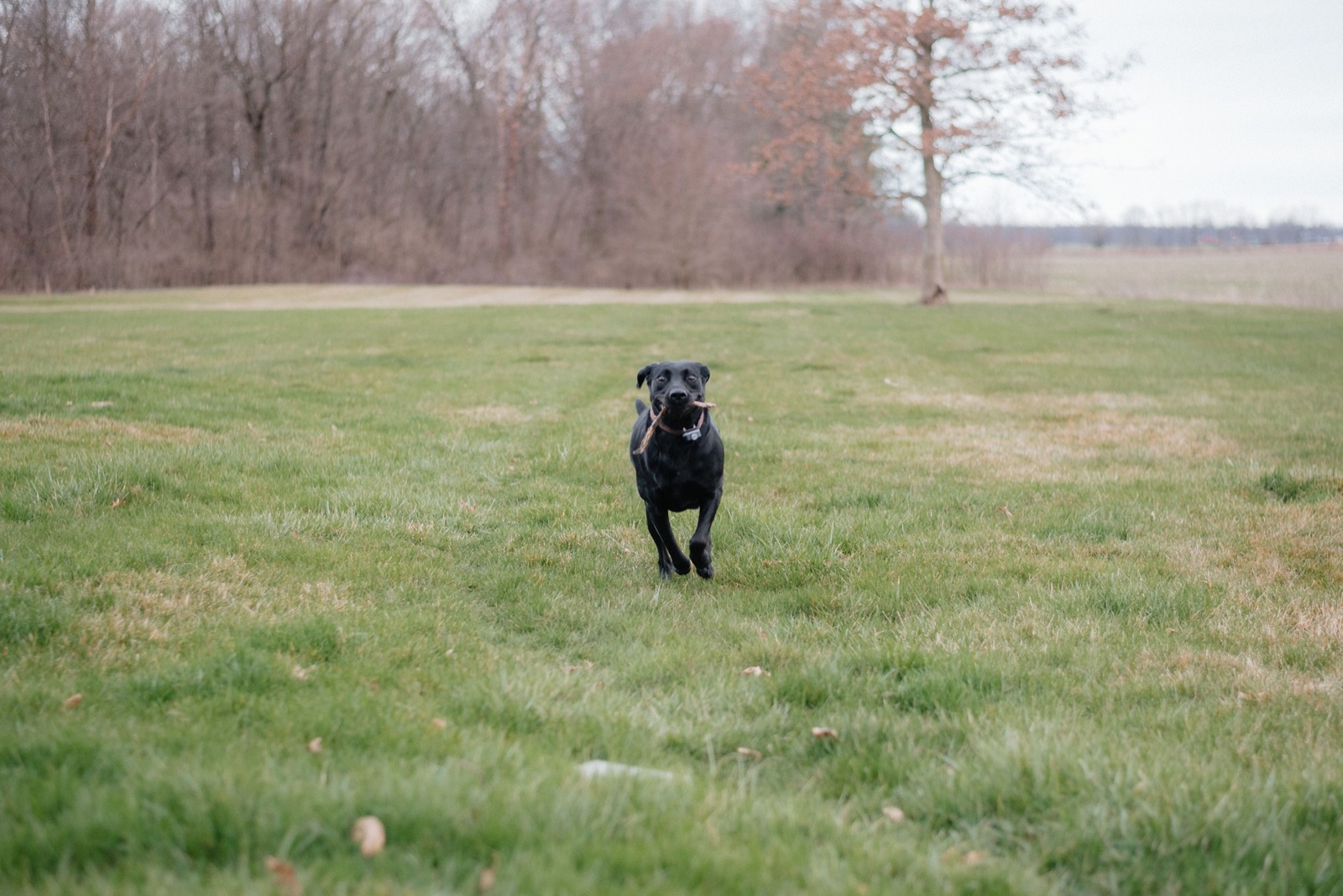
Labrador hip dysplasia is a joint problem that starts while a puppy grows. It is one of the reasons the breed club asks breeders to X-ray their dogs' hips, and one of the reasons weight matters so much in Labs. This guide explains what hip dysplasia is, the signs that should send you to the vet, how screening of a puppy's parents works with OFA and PennHIP, and what you can do about growth and weight. It is general information, not a diagnosis: only your vet can examine your dog, and your vet will discuss treatment options if they are needed.
What hip dysplasia is
The American College of Veterinary Surgeons (ACVS) describes canine hip dysplasia as a condition that begins as a dog grows and results in instability, or a loose fit, of the hip joint. The ball moves abnormally in the socket, and over time this wears the joint, leading to arthritis. It is most common in large breed dogs.
Why Labs are affected
ACVS calls the cause multifactorial and says heredity is "the biggest single risk factor." Cornell's Riney Canine Health Center describes it as a genetic condition that environment, such as nutrition and growth rate, can modify: overfeeding and rapid growth can worsen it in dogs already predisposed, while restricted growth can reduce how much it shows.
Joint problems are a big deal for the breed as a whole. In a UK study of Labradors under veterinary care, degenerative joint disease was recorded in 5.5% of dogs, and musculoskeletal disorders were the most common recorded cause of death.
Labrador hip dysplasia symptoms
ACVS and Cornell list these signs:
- Limping or lameness in the back legs
- Stiffness in the back legs
- Difficulty getting up, or reluctance to rise
- Reluctance to jump, for example into the car or onto furniture
- "Bunny-hopping" with both back legs together when running
- A swaying gait at the hips
- Loss of muscle in the hind legs, with weight shifted onto the front legs
- Pain around the hips
Many dogs with hip dysplasia show no obvious signs, ACVS notes, and the OFA adds that signs do not always match what X-rays show. So a Lab that still runs after a ball is not proof that its hips are fine.
Lab hip dysplasia age
According to Cornell, some dogs show signs as early as a few months old, while others show none early on or only later in life. ACVS describes two groups: younger dogs with loose hips but no arthritis yet, and mature dogs whose signs come from arthritis.
When to call the vet
Book a vet visit if your Lab limps for more than a day or two, struggles to get up, bunny-hops when running, or starts refusing jumps or stairs it used to manage. For puppies, mention any of these at the next checkup or sooner. If your Lab suddenly cannot stand or bear weight on a leg, or is in severe pain, call your vet or an emergency clinic now.
How vets check the hips
Cornell and ACVS describe diagnosis as a physical exam plus specially positioned X-rays, usually under sedation. Vets may also feel for looseness with a palpation test called the Ortolani sign; ACVS notes that many primary care vets can do it at the 10 to 16 week vaccination visits. Cornell suggests that puppies of predisposed breeds, or puppies with signs, be screened for hip laxity before 20 weeks of age.

Screening the parents: OFA and PennHIP
Because heredity is the biggest risk factor, the best thing you can do before you bring a puppy home is check the parents' hips.
What the breed club requires
The Labrador Retriever Club, the AKC parent club for the breed, requires OFA hip and OFA elbow evaluations, OFA eye exams, an EIC DNA test and a dilute (D locus) DNA test for its CHIC program. A breeder who tests should be able to show results for both parents.
OFA hip ratings
The Orthopedic Foundation for Animals grades hip X-rays as:
| OFA rating | Meaning |
|---|---|
| Excellent, Good, Fair | Within normal limits |
| Borderline | Unclear; more irregular than Fair but no definite arthritis |
| Mild, Moderate, Severe | Dysplastic |
For a final rating, the OFA says the dog must be at least 24 months old. Dogs from 4 to 24 months can get a preliminary evaluation. Normal results for dogs over 24 months are posted on the OFA website, so you can look parents up by name. An OFA number for a Lab starts with LR, and the letter after the number gives the rating: E for Excellent, G for Good, F for Fair.
PennHIP
PennHIP is a different X-ray method that measures how loose the hip is. According to Antech, which runs the PennHIP service, it can be performed reliably on dogs as young as 16 weeks, requires heavy sedation or general anesthesia, and must be done by a PennHIP-certified vet. Antech explains that the looser the hip by the PennHIP method, the greater the chance it will develop osteoarthritis. Cornell calls the PennHIP distraction method the most accurate measure of hip laxity in puppies.
Questions to ask a breeder
- Do both parents have OFA hip and elbow results, or PennHIP results? Can I see them?
- Are the results listed in the OFA database?
- Have the parents completed the Labrador Retriever Club's CHIC tests?
Cornell adds that a normal X-ray does not show a dog's full genetic risk, so a breeder who also knows the hip results of the parents' relatives is giving you more information.
Growth, weight and exercise
You cannot change a dog's genes, but Cornell's advice for large breeds is clear:
- Avoid overfeeding, especially fast-growing large-breed puppies.
- Feed a diet formulated for large breeds while your puppy grows; see our large breed puppy food guide.
- Do not supplement calcium or vitamin D in growing puppies.
- Keep a healthy weight for life. See Labrador weight for the body condition chart.
- Give regular, age-appropriate exercise. Cornell's panosteitis guidance suggests limiting repetitive high-impact or forced activity, such as long runs on hard ground, while a puppy is growing fast.
The evidence for lean Labs
In a lifetime study of 48 Labrador Retrievers, one dog in each pair was fed 25% less than its littermate pair-mate. Hip osteoarthritis on X-rays was recorded in 13% of the leaner dogs at age 5, against 52% of their pair-mates, and by the end of the study in 50% against 83%. The AKC also lists overfeeding and excessive weight gain as a risk factor for developmental orthopedic conditions such as hip dysplasia.
Labrador elbow dysplasia symptoms
Elbow dysplasia is the front-leg counterpart and is also part of the breed club's testing. ACVS says Labrador Retrievers have an increased predisposition to one form, medial compartment disease. Signs often appear from about 5 months on, though some dogs are not diagnosed until 4 to 6 years old. ACVS lists:
- Front leg lameness that gets worse over weeks to months
- Lameness that is worse after exercise and does not fully go away with rest
- Pain when the elbow is fully bent or straightened
- Reluctance to exercise for long or to finish a walk
Because both elbows are often affected, the limp can be hard to spot. The same vet visit applies.
If your Lab is diagnosed
There are medical and surgical options, and the right one depends on your dog's age, the X-rays and how much it affects daily life. Your vet will discuss options with you and may refer you to a board-certified veterinary surgeon. In the meantime, do not start supplements or pain medicines on your own. ACVS notes that dogs with hip dysplasia should be kept slim, which is something you can start on right away.
More on how joints relate to a long life is in Labrador lifespan. More guides are in the health section.
Questions
What are the signs of hip dysplasia in a Labrador?
Common signs include limping, stiffness in the back legs, difficulty getting up, reluctance to jump, a bunny-hopping gait when running, swaying hips and loss of muscle in the hind legs. Some affected dogs show no obvious signs, so a vet exam and X-rays are what confirm it.
At what age does hip dysplasia show up in Labs?
Cornell notes that some dogs show signs as early as a few months old, while others show none until later in life. ACVS describes younger dogs with loose hips and older dogs whose signs come from arthritis.
How do I know if a Lab puppy's parents have good hips?
Ask the breeder for both parents' OFA hip results (final ratings are given from 24 months of age) or PennHIP results, and look them up in the OFA's public database. The Labrador Retriever Club requires OFA hip and elbow evaluations for its CHIC program.
Can I prevent hip dysplasia in my Lab?
You cannot change genetics, but Cornell advises avoiding overfeeding in fast-growing large-breed puppies, feeding a diet formulated for large breeds, not supplementing calcium or vitamin D and keeping a healthy weight for life. In a lifetime study of Labs, leaner dogs had much less hip osteoarthritis.
Is hip dysplasia treatable?
There are medical and surgical options, and which is right depends on the dog's age and how severe the changes are. Your vet, and if needed a board-certified veterinary surgeon, will discuss options for your dog.
Sources
- American College of Veterinary Surgeons — Canine Hip Dysplasia
- Cornell Riney Canine Health Center — Canine hip dysplasia (CHD)
- Orthopedic Foundation for Animals — Hip Dysplasia
- Orthopedic Foundation for Animals — FAQs
- Orthopedic Foundation for Animals — How to Interpret OFA Numbers
- Antech Imaging Services — PennHIP FAQ
- Labrador Retriever Club, Inc. — Health testing requirements (2021, via AKC)
- American College of Veterinary Surgeons — Canine Elbow Dysplasia
- Lawler D.F. et al. (2008) — Diet restriction and ageing in the dog: major observations over two decades, British Journal of Nutrition 99(4):793–805
- McGreevy P.D. et al. (2018) — Labrador retrievers under primary veterinary care in the UK: demography, mortality and disorders, Canine Genetics and Epidemiology 5:8
- Cornell Riney Canine Health Center — Panosteitis in dogs
- American Kennel Club — Proper Puppy Nutrition Nourishes Rapid Growth
More in Health
Guide in Food
Labrador weight: how to tell if your Lab is at a healthy weight
The number on the scale is only half the answer. Your hands and eyes, using a 9-point body condition chart, tell you whether that number is right for your Lab.
Buying guide in Gear
Dog bed for a Labrador: size, orthopedic foam, chew-resistant and washable
Measure your Lab, match the bed to how it sleeps, and pick foam and a cover that can take the weight, the hair and the occasional muddy paw.
Buying guide in Food
Large breed puppy food for Labradors: what the label must say
A Lab puppy grows toward an adult weight of 55–80 pounds, and grows rapidly in its first months. The right food keeps that growth steady, not fast.