Buying guide
Chew toys for Labs: safe materials, the right size and what vets warn against
A Lab will chew something. Give it a toy that is big enough not to swallow and soft enough not to break a tooth.
Published
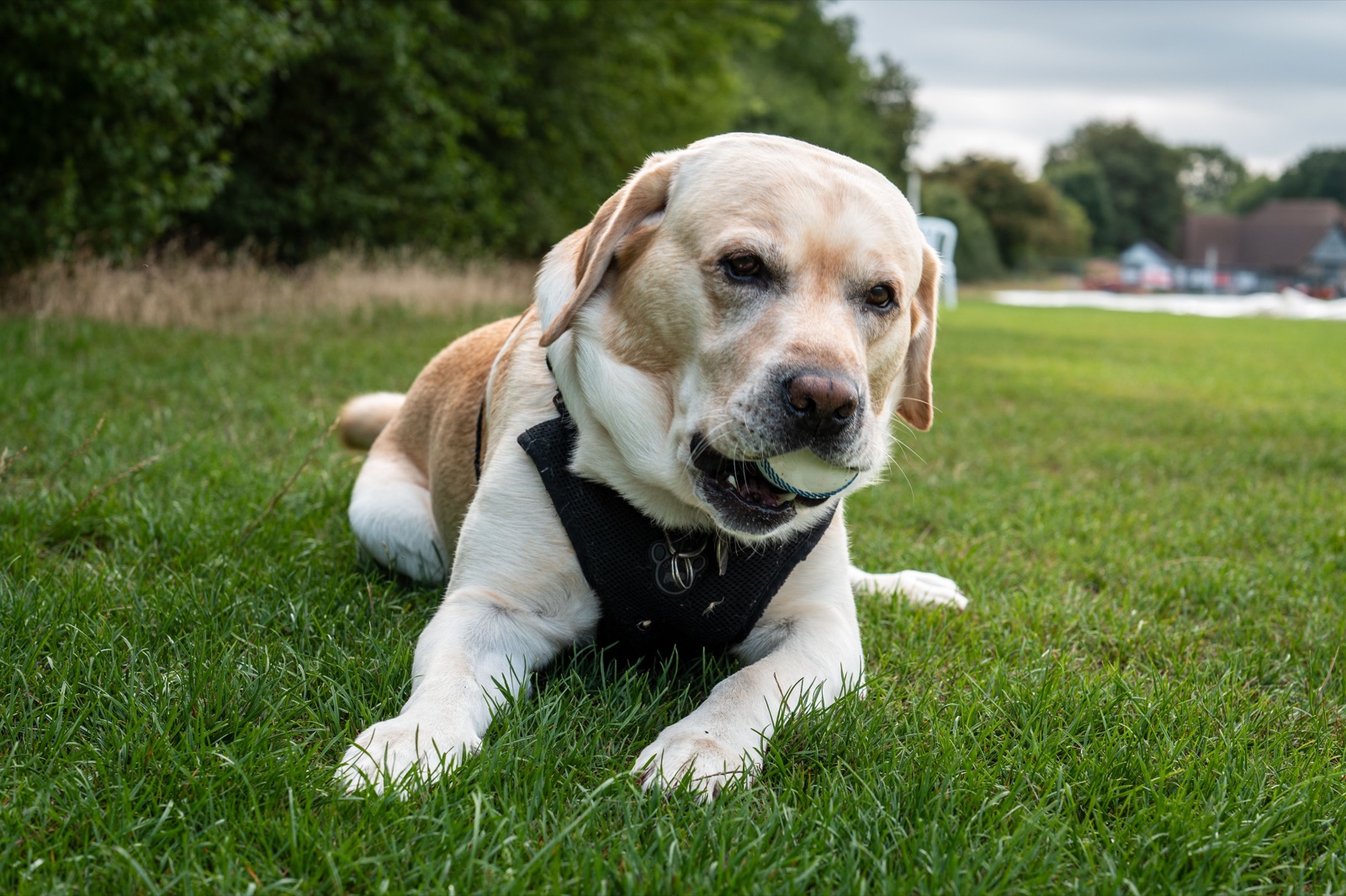
Chew toys for Labs have two jobs that pull in opposite directions. They have to be tough enough for a dog with strong jaws that chews for fun, and soft enough that they don't break the dog's teeth. Many "tough" chews sold for big dogs fail the second test. This guide explains what veterinary dental sources say about hard chews, how to size a chew for a Lab, which materials suit which dog, and when to throw a toy away.
Why chewing matters for a Lab
Chewing is normal dog behavior, and many Labs are enthusiastic about it. A Lab with nothing approved to chew will find a table leg or a shoe. A good chew toy gives that urge a safe outlet, keeps a puppy busy during teething, and can help an adult settle in its crate.
The risk is the other way round: the chew is harder than the tooth.
What vets say about hard chews
The tooth usually loses
Cornell's Riney Canine Health Center says fractured teeth are commonly caused by chewing very hard objects, and advises avoiding antlers, hooves and bones, which may break a tooth or splinter and cause stomach problems. The AKC says antlers and other excessively hard chews are a common cause of broken teeth in dogs, and that broken teeth can lead to abscesses and infections.
A 2019 study from the University of Pennsylvania's veterinary school measured how much force it took to fracture dogs' upper fourth premolars, the large chewing teeth at the back. The authors concluded that hard treats and toys that do not yield well below that force might put teeth at increased risk. In plain terms: if a chew doesn't give, the tooth may.
The fingernail test
Cornell reports that most veterinary dentists go by a simple check: you should be able to make a dent in the item with your fingernail. If you can't, it is too hard for your Lab. Antlers, hooves and real bones fail it, and so does any nylon or plastic chew that won't dent.
Signs of a broken tooth
Cornell lists signs to watch for: avoiding chew toys or hard treats, walking up to the food bowl and leaving without eating, reacting to hot and cold (even avoiding cool water), and, with an older fracture, swelling and pain from an abscess. If you see tooth damage, make a veterinary appointment; Cornell notes that treatment is easier the sooner it starts.
Types of chew toys
Natural rubber toys
Firm but with some give, and usually the first choice for a strong chewer. Hollow shapes can be stuffed with food. Cornell names toys from Kong and Goughnuts as good options. KONG says its black Extreme formula is the strongest rubber it makes and is designed for power chewers.

Nylon and hard plastic chews
Long-lasting because they are very hard. That is the problem: check each one with the fingernail test, and skip any that don't dent.
Antlers, hooves and real bones
Often sold as "natural" bones for retrievers. Cornell and the AKC both advise against them because of tooth fractures, and the AKC adds that pieces that break off can lodge in the mouth, throat or intestines and may need emergency surgery.
Edible and dental chews
Rawhide, pressed chews and dental chews are eaten, not kept. Cornell says some rawhides can be safe but always require supervision. For dental chews, the Veterinary Oral Health Council (VOHC) lists accepted products that met its standard for plaque or tartar control when used as directed; the VOHC also advises giving the right-sized chew for your dog's weight and only when you can watch.
Rope and plush
Not chew toys for a Lab. The AKC says rope toys are best for interactive tug and should be put away after, so your dog can't shred and swallow them. Plush toys are for carrying and cuddling, and the AKC notes some dogs are on a mission to destroy them.
Comparison table
| Type | Passes the fingernail test | Unsupervised in the crate | Notes for a Lab |
|---|---|---|---|
| Natural rubber | Usually | If sized up and intact | Best general choice; can be stuffed with food |
| Hard nylon or plastic | Often not | Only if it dents | Check each product |
| Antlers, hooves, bones | No | No | Vet sources advise against |
| Edible and dental chews | Varies | No | Supervise; VOHC seal is about plaque and tartar |
| Rope and plush | Yes | No | For play with you, then put away |
What to look at before you buy
Size: bigger than the back of the mouth
The AKC suggests chew toys that don't fit all the way into your dog's mouth. KONG's rule is that the widest part of the toy should be bigger than the back of the dog's mouth. Its weight bands are 30–65 lb for Large and 60–90 lb for X-Large, it suggests sizing up if your dog is between sizes, and says power chewers may need to go up one or two sizes. Most adult Labs land in those two bands; a hard chewer belongs at the top of them.
Material: firm, not rock-hard
Look for toys that give under your fingernail, that won't break into small pieces, and that have no parts to chew off. Humane World for Animals advises avoiding or altering toys with strings, eyes or other parts that could be chewed off and swallowed.
Indestructible is not a real category
No toy survives every Lab. KONG says plainly that no dog toy is indestructible. Treat "indestructible dog toys for labs" as a marketing phrase and judge the toy by size and material instead.
Chew toys for Lab puppies
Puppies teethe, and a sore mouth makes them chew everything. The AKC's puppy toy guide recommends durable toys that won't break apart easily, supervision even with familiar toys, and throwing away toys with rips, tears or deep punctures, because loose foam or stuffing can cause bowel obstructions. Size for the dog your puppy will be in a few weeks, not the one it is today; Lab puppies grow fast and a chew that was safe last month may now fit down the throat.
Which type suits whom
- Lab puppy: natural rubber sized up, plus supervised soft toys; no hard nylon, antlers or bones.
- Adult Lab that chews moderately: natural rubber, a stuffed food toy, and VOHC-listed dental chews given while you watch.
- Lab that destroys everything: the toughest rubber in the largest size that suits your dog, given under supervision until you know how it holds up.
- Lab left alone in a crate: only an intact rubber toy too big to swallow. See our crate guide for setting up the crate.
How to use and care for chew toys
A safe chewing routine
Supervise at first
KONG labels its toys for supervised use only. Watch how your Lab chews any new toy before you leave it alone with it.
Inspect and replace
KONG's instruction is to inspect the toy frequently and remove it if damaged. Humane World for Animals says to throw out any toy that starts breaking into pieces or tears. Replace a chew once it is worn small enough to fit in your Lab's mouth.
Rotate
Keep a few chews out and swap them weekly, as Humane World for Animals suggests, so each one stays interesting. For fetch, tug, puzzle and water toys, see our guide to the best toys for Labs, and for chew-proof bedding see the dog bed guide.
For dental questions or a dog that has stopped chewing, talk to your vet. More on Lab care is in the health section.
Questions
What chew toys are safe for Labs?
Toys that give a little when your dog bites and are too big to swallow. Cornell's veterinary college says most veterinary dentists suggest you should be able to dent a chew with your fingernail, and to avoid antlers, hooves and bones.
Are antlers and bones good chews for a Labrador?
No. The AKC says antlers and other excessively hard chews are a common cause of broken teeth in dogs, and pieces that break off can lodge in the mouth, throat or intestines.
What are good chew toys for Lab puppies?
Durable toys that won't break apart, sized for the dog your puppy will soon be, and used under supervision. Throw out any toy with rips, tears or deep punctures, which the AKC warns can release stuffing and cause blockages.
Are there indestructible dog toys for Labs?
No. Even KONG, which sells its Extreme rubber line for power chewers, says no dog toy is indestructible and labels its toys for supervised use, to be inspected often and removed if damaged.
What does the VOHC seal mean on a dog chew?
The Veterinary Oral Health Council seal means the product met its standard for plaque or tartar control when used as directed. It is about effectiveness, so still choose the right size for your dog and watch it chew.
Sources
- Cornell University Riney Canine Health Center — Risks of a fractured tooth
- American Kennel Club — Antlers for dogs: are these treats safe?
- Frontiers in Veterinary Science (2019) — Fracture limits of maxillary fourth premolar teeth in domestic dogs under applied forces
- Veterinary Oral Health Council — About the VOHC Seal and accepted products
- KONG Company — KONG Extreme (sizes and safety)
- American Kennel Club — A guide to toy shopping for your pup
- American Kennel Club — Choosing the right dog toys and teething toys for your puppy
- Humane World for Animals — Safe dog toys
More in Gear
Guide in Puppy
When do Lab puppies stop biting? Teething, mouthing and what to do
Why Labs are so mouthy, how long teething lasts, and calm, reward-based steps that teach your puppy a soft mouth.
Buying guide
Best toys for a Labrador: retrieving, puzzle, tug, water and chew toys
Labs were bred to carry things in their mouths. Pick toys by job, size them for a big mouth, and put the risky ones away after play.
Buying guide
Dog bed for a Labrador: size, orthopedic foam, chew-resistant and washable
Measure your Lab, match the bed to how it sleeps, and pick foam and a cover that can take the weight, the hair and the occasional muddy paw.