Guide
Bathing a Labrador: how often, step by step, and drying the ears
Bathe when your Lab needs it, not on a fixed weekly schedule, then rinse longer than you think and dry the coat and ears thoroughly.
Published
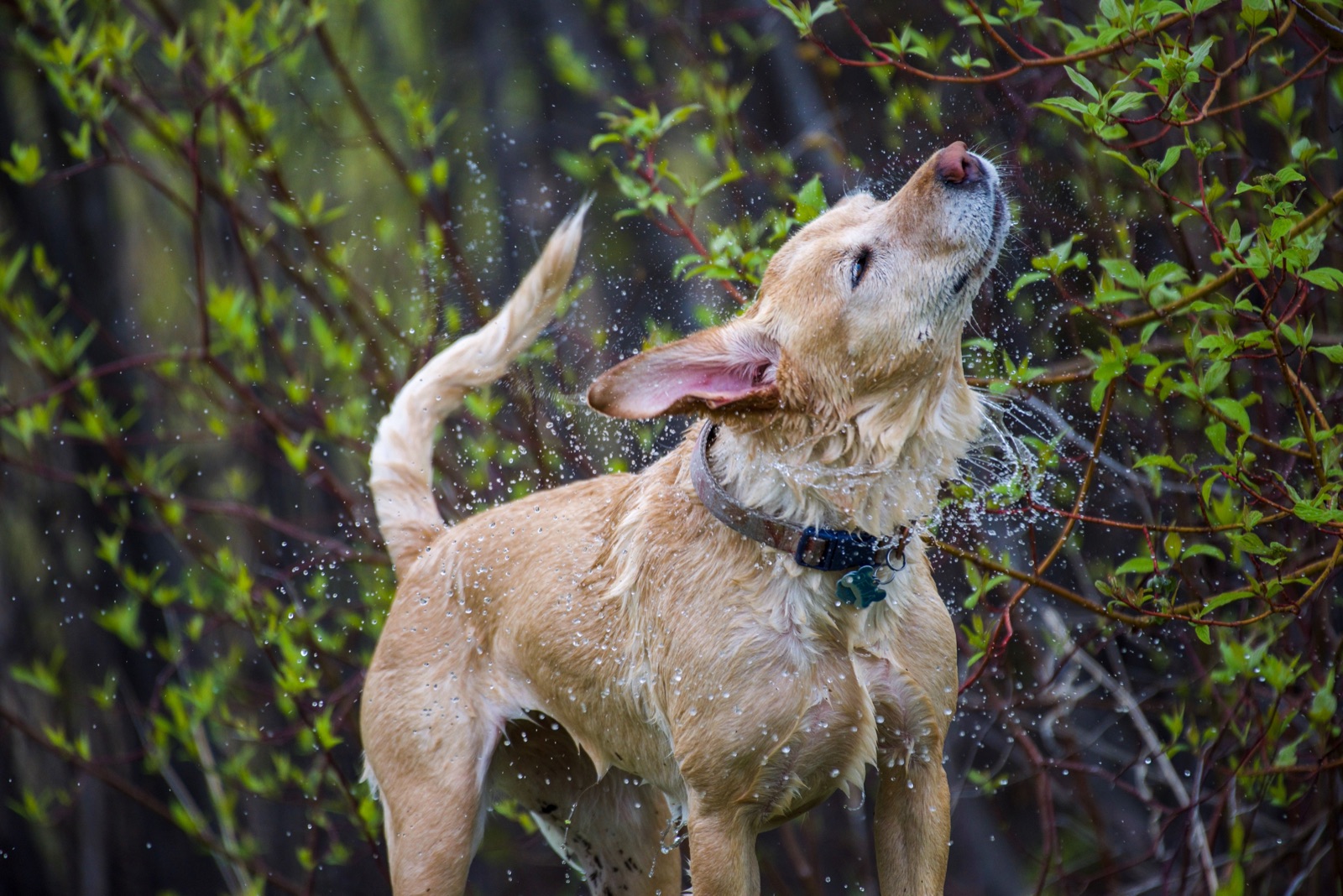
How often should you bathe a Labrador? For a Lab that spends most of its time indoors, about once every four to six weeks, and in between only when it gets properly dirty. This guide gives you that schedule and what changes it, a step-by-step bath for a large double-coated dog, how to get the coat fully dry, and how to look after the ears afterward.
What you'll need
Essentials
-
Dog shampoo, pH-balanced for dogs
: human shampoo and soap don't suit canine skin. -
Wide-tooth metal comb or brush
: comb before the bath to remove loose hair, debris and tangles. -
Several thick, absorbent towels
: a Lab's dense undercoat holds a lot of water. -
Cotton balls
: to keep water out of the ears and to wipe the outer ear afterward.
Optional
-
Dog hair dryer
: speeds up drying a double coat; get your Lab used to the noise first. -
Rubber curry brush
: works shampoo through the coat and lifts loose hair while wet. -
Veterinary ear cleaning solution
: for ear cleaning after swimming or bathing, as your vet advises.
How often to bathe a Lab
The usual schedule
Marilyn Little of the Labrador Retriever Club, quoted by the AKC, recommends bathing Labs that live mostly indoors "once every four to six weeks." A groomer quoted in another AKC article gives a simple test for any dog: wash it "when they are no longer huggable."
What changes the schedule
- Swimming and mud. The AKC notes that dogs that play in the ocean or hunt in muddy water may need more baths than indoor dogs. If your Lab swims often, plan for extra baths in swimming season.
- Pool swims. After a swim in a pool, bathe your Lab to remove chlorine, which can dry out the coat.
- Allergies in the family. A groomer quoted by the AKC says owners with allergies may benefit from more frequent bathing to manage dander.
- Skin conditions. If your vet has prescribed a medicated shampoo, follow their schedule instead of this one.
Why not more often
The Lab's coat is made to resist weather, and its natural oils are part of that. A groomer quoted by the AKC warns that overbathing can strip too much oil from the skin of thick or double coats, including Labs. Another AKC piece on double coats says to bathe only when the dog gets dirty or smelly, because frequent baths can dry out the skin and coat. Thorough brushing between baths does more for the coat than extra baths.
The schedule is the same whatever the color: a black Lab, a yellow Lab and a chocolate Lab have the same coat.
Between baths
Most of a Lab's coat care happens between baths. A groomer quoted by the AKC says thorough brushing, combing and conditioning matter more to a dog's health than bath time. For short-coated dogs, another groomer in the same article suggests a rubdown with a damp washcloth to remove dirt between baths. For a Lab back from a muddy walk, that often means a towel and a damp cloth at the door instead of a full shampoo, followed by a brush once the coat is dry.
Before the bath
Brush and comb first
The AKC's advice is to comb your Lab before the bath to remove debris and tangles, and to brush thoroughly to remove loose hair. In shedding season this matters most, because there is far more loose undercoat to get out. See best brush for a Labrador for the tools.
Pick the place
A Lab is a large dog, so think about where it fits and how you'll keep it from slipping. A bathtub with a non-slip mat, a walk-in shower or, in warm weather, a yard with a hose all work. A black Lab in a bathtub looks sweet in photos, but lift carefully or let your dog step in on its own.
Set out everything first
The AKC says to gather everything you need before you start, dog included: shampoo, a washcloth or brush, towels and cotton balls. A wet Lab left alone while you fetch a towel will shake the bathroom wet.
How to bathe a Labrador, step by step
- Protect the ears. Place a cotton ball gently in the opening of each ear to keep water out, as the AKC suggests. Don't push it deep.
- Wet the coat down to the skin. Use water that is warm, not hot. A Lab's topcoat sheds water, so it takes time to soak through to the undercoat.
- Lather into the skin. Use a shampoo made for dogs; dog shampoo for Labs explains how to choose one. Work it in all over, including the belly, under the tail, the legs and paws, under the neck and around the ears. Keep shampoo out of the eyes.
- Rinse, then rinse again. Rinse gently with warm water, starting at the head and face, until no shampoo is left. The AKC calls rinsing "the most important step" and says it should take as much time as shampooing. The goal is no shampoo left on the skin.
- Remove the cotton balls and wipe the outer ear.

Drying a double coat
Towels first
Rub your Lab vigorously with a towel, or several, to remove as much water as possible. Let your dog shake; it removes a lot of water on its own, so do it where that doesn't matter.
Dryer, if you use one
The AKC lists a canine hair dryer among Lab grooming essentials and suggests getting your dog used to it first by letting it run a few times before you use it on the dog. When drying:
- don't use the hottest setting;
- keep the nozzle at least one foot from the skin to avoid burns;
- keep it moving, and work down to the undercoat.
Finish in a warm room
After towels or a dryer, the AKC suggests letting the dog dry completely in a warm room. A Lab's undercoat can feel dry on top and still be damp underneath, so check by parting the hair down to the skin.
Brush once dry
Brush again when the coat is fully dry; a lot of loosened undercoat comes out after a bath. If you use a deshedding tool, FURminator's instructions say to use it only on a completely dry coat, and that right after bathing and drying is the best time.
Ears after water
The AKC notes that a Lab's ears often block air from circulating underneath, which makes them prone to infection. Cornell's Riney Canine Health Center recommends a routine ear cleaning if the ears get wet, such as after swimming or bathing, and says dogs with floppy ears may need their ears cleaned more often.
Cornell's advice for doing it safely:
- Use a cleaning solution made for dogs; avoid anything with alcohol or hydrogen peroxide.
- Wipe out debris with cotton balls or pads, working from the inside of the ear outward.
- Don't use cotton swabs, which can push debris deeper.
- Don't squeeze the bottle into the canal.
See your vet instead of cleaning if you see redness, itching, head shaking, unusual discharge or extra wax, an odor, or if your dog is uncomfortable when the ear is touched. Ask your vet to show you how to clean your Lab's ears the first time.
Common mistakes
- Bathing every week out of habit. For a healthy indoor Lab, that strips the coat's oils without any benefit.
- Using human shampoo or dish soap. Neither suits a dog's skin.
- Rinsing too briefly. The undercoat traps suds you can't see.
- Leaving the undercoat damp. Dry down to the skin, not just the surface.
- Forgetting the ears. Dry and, if your vet advises it, clean them after every bath and swim.
More on coat care, including Labrador shedding, in the grooming section.
Questions
How often should you bathe a Labrador?
For a Lab that lives mostly indoors, about once every four to six weeks is the guidance from Marilyn Little of the Labrador Retriever Club, quoted by the AKC. Bathe more often only when your dog is actually dirty or smelly, since overbathing can strip oil from a double coat.
How often should I bathe my black Lab?
The same as any other Lab: about every four to six weeks for an indoor dog, and when it is dirty. Coat color doesn't change how often a Lab needs a bath.
Should I bathe my Lab after swimming?
After a swim in a pool, yes: the AKC recommends a bath to remove chlorine, which can dry out the coat. Dogs that play in the ocean or muddy water may need baths more often than indoor dogs. Dry the ears after any swim.
Can I let my Lab air dry after a bath?
Towel off as much water as you can first, then let your Lab dry completely in a warm room. If you use a dryer, keep it off the hottest setting and at least a foot from the skin.
Sources
- American Kennel Club — Grooming Your Labrador Retriever
- American Kennel Club — How Often Should You Wash Your Dog?
- American Kennel Club — It's Bath Time: Towels, Brushes, Dog Shampoo and More
- American Kennel Club — Can You Use Human Shampoo on Dogs?
- American Kennel Club — How to Groom a Double-Coated Dog
- American Kennel Club — At-Home Grooming Tips for Summer
- Cornell Richard P. Riney Canine Health Center — How to Clean Your Dog's Ears
- FURminator — Which FURminator do I need?
More in Grooming
Buying guide
Dog shampoo for Labs: how to choose one for a double coat
Pick a gentle shampoo made for dogs, keep medicated ones for when your vet asks for them, and spend longer rinsing than lathering.
Buying guide
Best brush for a Labrador: which tools suit a short double coat
A Lab's coat is short but double, so the right kit is a gentle everyday brush plus one tool that reaches the undercoat when shedding peaks.
Guide
Labrador shedding: why Labs shed, when it peaks and what helps
Labs shed all year and heavily twice a year. You can't stop it, but the right brushing routine keeps most of the hair off your floor.