Buying guide
Dog shampoo for Labs: how to choose one for a double coat
Pick a gentle shampoo made for dogs, keep medicated ones for when your vet asks for them, and spend longer rinsing than lathering.
Published
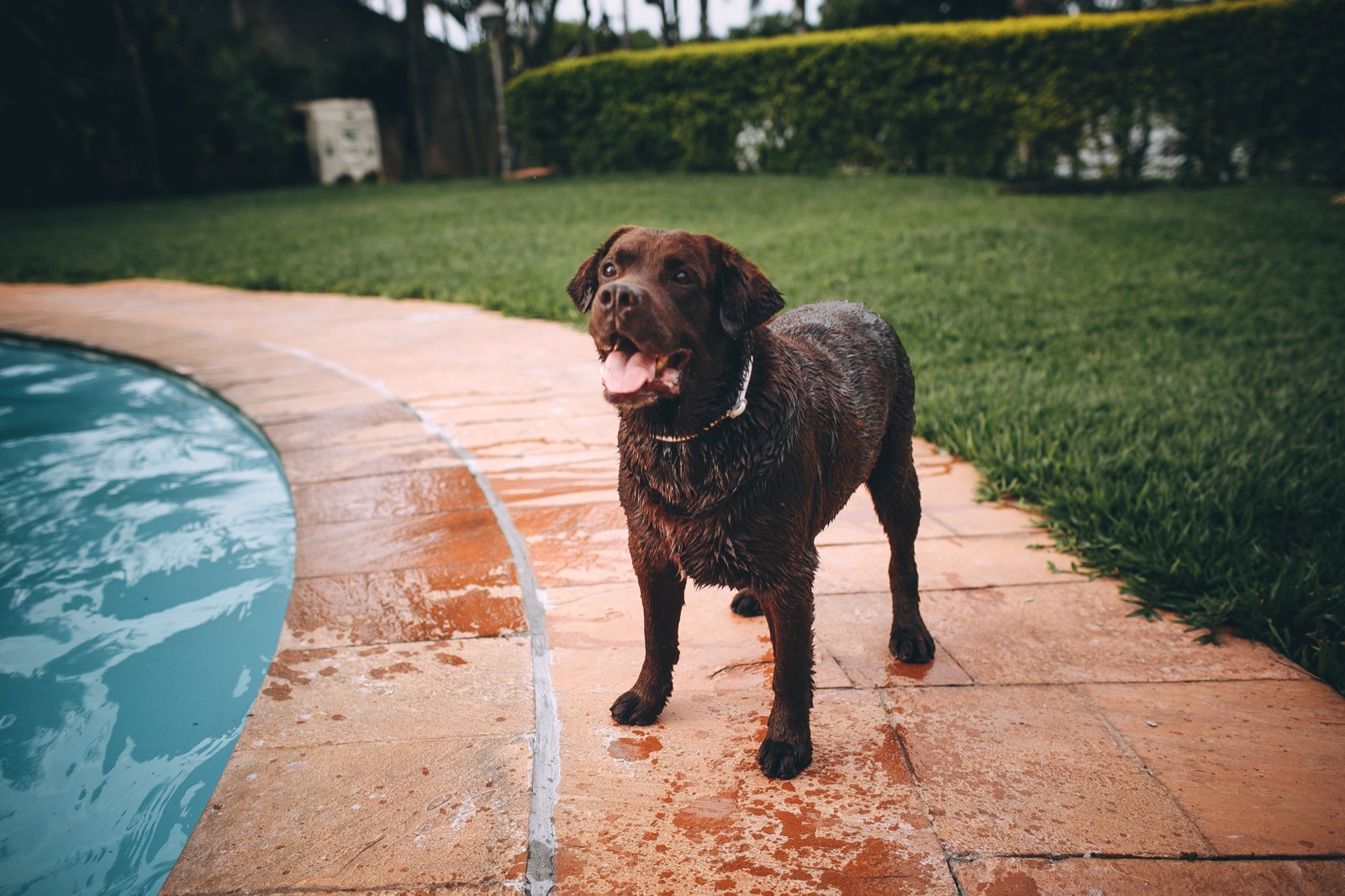
Choosing a dog shampoo for Labs is mostly about what to avoid. A Lab's dense, weather-resistant double coat doesn't need much washing, and its skin is more delicate than ours, so you're looking for a gentle product made for dogs that rinses out completely. This guide covers why human products are out, the main types of dog shampoo, what to read on the label, which type suits which Lab, and how to use it.
What shampoo has to do for a Lab
The Labrador breed standard describes a short, dense topcoat over a weather-resistant undercoat. That coat keeps out a lot of water and dirt, and its natural oils are part of how it works. A groomer quoted by the AKC warns that overbathing can strip too much oil from the skin of thick or double coats, Labs included.
So a good shampoo for a Lab cleans without stripping the coat, suits canine skin, and rinses out of a dense undercoat without leaving residue. The AKC's Lab grooming advice is simple: use "a quality canine shampoo" and rinse with clean, warm water.
Why not human shampoo or soap
Different skin pH
Human skin is on the acidic side, and dog skin is closer to neutral. Two AKC articles give slightly different figures for dogs (about 6.2–7.4 in one, 5.5–7.5 in the other), but both put dog skin less acidic than ours, so a shampoo made for people is made for the wrong skin. The AKC's bath-time guide says shampoo "meant for people" doesn't have the right pH for dogs.
Thinner skin
The AKC also notes that people have 10–15 layers of skin cells and dogs only 3–5. A thin protective layer on the surface, the acid mantle, guards against bacteria and moisture loss. Human shampoo can disrupt it and leave the skin dry.
Soap and dish detergent
The AKC notes that soap tends to be alkaline, which can disrupt a dog's skin, and its answer on dish soap is a flat no. The AKC says dog shampoos made with detergents work best on canine skin, and suggests checking the label to confirm the product is pH-balanced for dogs.

Types of dog shampoo for Labs
The AKC's bath-time guide lists most of the kinds you'll find on the shelf.
Gentle everyday shampoos
Mild cleansing shampoos made for dogs, sometimes sold as natural or organic. For most healthy Labs that get a bath every few weeks, this is the default.
Oatmeal shampoos
Shampoos with oatmeal, which some groomers recommend for itchy skin, according to the AKC. If your Lab is itchy often, though, the itch has a cause; see your vet rather than relying on shampoo.
Deshedding shampoos
Shampoos sold to help with shedding. The AKC suggests a deshedding or shedding-control shampoo for double-coated dogs, and a groomer it quotes recommends a product designed for shedding to avoid stripping the coat's oils. A shampoo won't stop a Lab shedding, but used with a good brush-out after the coat is dry, it can help release loose undercoat.
Heavy-duty shampoos
Stronger cleansers for very dirty dogs. Useful for a Lab that has rolled in something, not for every bath.
Medicated shampoos
Antifungal, antiseptic and other medicated shampoos treat skin conditions. For a dog that is scratching a lot, the AKC's advice is to ask your veterinarian or groomer about a medicated shampoo. Use these only on your vet's advice and exactly as directed; they are treatments, not upgrades.
Flea and tick shampoos
These contain pest-control ingredients. Ask your vet before using one, especially on a puppy or alongside other flea and tick products.
Dry shampoos
Waterless products for spot cleaning between baths.
Comparison table
| Type | What it's for | Good fit for a Lab when | Caution |
|---|---|---|---|
| Gentle everyday | Routine cleaning | Healthy skin, bath every few weeks | Still rinse thoroughly |
| Oatmeal | Sensitive or dry-feeling skin | Your vet agrees it suits your dog | Ongoing itch needs a vet visit |
| Deshedding | Shedding seasons | Spring and fall coat blow | Doesn't replace brushing |
| Heavy-duty | Very dirty coats | After mud or a roll in something smelly | Not for every bath |
| Medicated | Skin conditions | Your vet prescribes or recommends it | Follow the vet's directions exactly |
| Flea and tick | Parasite control | Your vet has advised it | Check with your vet first |
| Dry shampoo | Spot cleaning | Between baths | Not a substitute for a real rinse |
What to look at on the label
Shampoo labels make many claims. A few details matter more than the rest for a Lab.
Five things to check
Made for dogs and pH-balanced
The first thing to check, as the AKC suggests: the label should say the product is for dogs and pH-balanced for canine skin.
Suitable for puppies, if you have one
For a Lab puppy, choose a product labeled as suitable for puppies and follow the maker's minimum age. Ask your vet before using flea, tick or medicated products on a puppy.
Dilution and contact time
Some shampoos are meant to be diluted, and some ask you to leave the lather on for a set time. Follow the directions on your bottle; products differ.
Fragrance and extras
Perfume doesn't make a dog cleaner, and the AKC notes that additives, dyes and perfume in human shampoos can irritate a dog's skin. If your dog's skin reacts after a bath, stop using that product and ask your vet.
Black, yellow or chocolate
Shampoos aimed at a coat color are about appearance. All three Lab colors share one coat type, so pick the shampoo for your dog's skin, not its color.
Which type suits which Lab
- An adult Lab with healthy skin that lives mostly indoors: a gentle everyday dog shampoo. The AKC's Lab grooming advice is a bath about every four to six weeks for such dogs.
- A swimmer: after a swim in a pool, the AKC recommends a bath to remove chlorine, which can dry out the coat. A gentle shampoo is enough.
- A Lab in coat season: a deshedding shampoo, followed by a full dry and a brush-out.
- A Lab with itchy, red or flaky skin: no shampoo choice of your own. See your vet; they may recommend a medicated shampoo.
- A puppy: a gentle shampoo labeled for puppies, used only when the puppy is actually dirty.
How to use it: rinsing matters most
The AKC calls rinsing "the most important step" of a bath and says it should take as much time as shampooing. Its bath-time guide adds that rinsing takes patience, because you want to remove all traces of the shampoo. A double coat holds suds in the undercoat, so keep rinsing well after the water looks clear.
A few more points:
- Brush your Lab before the bath to remove loose hair and debris.
- Use warm, not hot, water and wet the coat down to the skin.
- Work the lather into the skin, including the belly, legs, paws, under the tail and around the ears.
- Rinse from the head back until no shampoo is left.
- Dry thoroughly.
The full routine, with drying and ear care, is in bathing a Labrador. For coat season, see Labrador shedding, and for everything else, the grooming section.
Questions
What is the best dog shampoo for Labrador Retrievers?
For a healthy Lab, a gentle shampoo made for dogs and labeled pH-balanced for canine skin is the usual choice. Medicated shampoos are for skin conditions and should be used only when your vet recommends one.
Can I use human shampoo on my Lab?
Not for regular baths. Dog skin is less acidic than human skin and thinner, so human shampoo can disrupt its protective barrier and leave it dry. Dish soap is not an option either.
Do black Labs or chocolate Labs need a special shampoo?
No color needs its own shampoo. Black, yellow and chocolate Labs have the same coat, so the choice depends on your dog's skin and how dirty it gets, not on color.
What shampoo should I use on a Lab puppy?
Use a gentle dog shampoo whose label says it is suitable for puppies, and follow the maker's age guidance. Ask your vet before using any flea, tick or medicated shampoo on a puppy.
Sources
- American Kennel Club — Can You Use Human Shampoo on Dogs?
- American Kennel Club — Can I Wash My Dog With Soap?
- American Kennel Club — It's Bath Time: Towels, Brushes, Dog Shampoo and More
- American Kennel Club — How Often Should You Wash Your Dog?
- American Kennel Club — How to Groom a Double-Coated Dog
- American Kennel Club — Grooming Your Labrador Retriever
- American Kennel Club — At-Home Grooming Tips for Summer
- The Royal Kennel Club — Retriever (Labrador) breed standard
More in Grooming
Guide
Bathing a Labrador: how often, step by step, and drying the ears
Bathe when your Lab needs it, not on a fixed weekly schedule, then rinse longer than you think and dry the coat and ears thoroughly.
Guide
Labrador shedding: why Labs shed, when it peaks and what helps
Labs shed all year and heavily twice a year. You can't stop it, but the right brushing routine keeps most of the hair off your floor.
Buying guide
Best brush for a Labrador: which tools suit a short double coat
A Lab's coat is short but double, so the right kit is a gentle everyday brush plus one tool that reaches the undercoat when shedding peaks.