Guide
How to potty train a Lab puppy: a schedule, rewards and no punishment
Take your puppy out often, reward every success, supervise or confine the rest of the time, and clean up accidents without a fuss.
Published
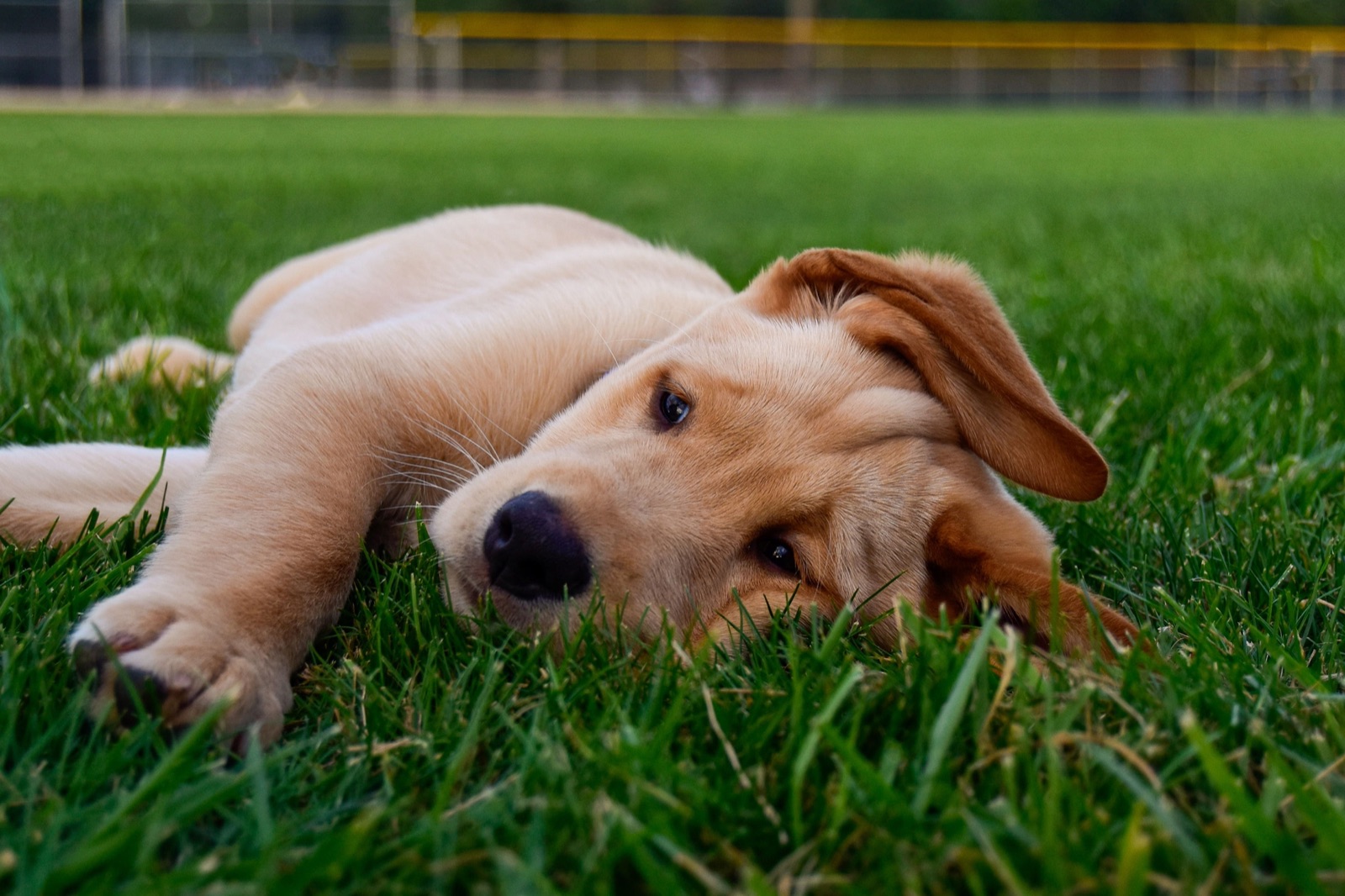
Here is how to potty train a Lab puppy in a way that works with the breed: take your puppy out often and on a schedule, reward every success outside, keep your puppy supervised or in a small space the rest of the time, and treat accidents as information, not crimes. By the end you will have a daily routine you can follow from the day your puppy comes home, and a plan for the setbacks that every puppy has.
What you'll need
Essentials
-
Enzymatic pet stain and odor cleaner
: removes the smell that draws a puppy back to the same spot; follow the instructions on your product. -
A crate sized for an adult Lab, with a divider
: keeps the space small enough that your puppy won't want to soil it, and grows with a breed that reaches 55 to 80 pounds. -
A 6-foot leash
: for trips to the potty spot and for keeping your puppy close to you indoors. -
Small training treats
: a reward given the moment your puppy finishes outside teaches it where to go. -
Poop bags
: for walks and for keeping the yard spot clean.
Optional
-
Baby gates
: close off a small, easy-to-clean room when you can't watch your puppy. -
Puppy pads
: aKC notes they can help owners who cannot get home often during the day.
Before your puppy comes home
AKC advises starting potty training the day your puppy arrives. Most puppies come home at around 8 weeks, when bladder control is at its weakest, so the first weeks are about frequent trips out rather than long stretches of holding it.
Get three things ready:
- A potty spot. Pick one place outside close to your door. Humane World for Animals recommends taking your puppy to the same spot each time, on a leash.
- A confinement area. A crate or a small room behind baby gates for times you can't watch your puppy.
- A cleaner. AKC recommends keeping an enzymatic pet stain cleaner on hand so the smell of an accident does not draw your puppy back.
Choose a crate sized for an adult Lab
A crate helps because, as AKC puts it, dogs generally prefer not to soil their sleeping area. The crate should let your puppy stand, turn around and lie down comfortably, but not leave room to use one end as a bathroom. Labs grow from small puppies into dogs of 22½ to 24½ inches at the shoulder (males) or 21½ to 23½ inches (females), so AKC's suggestion of buying a crate for the adult size and using a divider saves you from replacing it. The crate training guide covers how to make the crate a place your puppy likes.
Set up a potty schedule
A predictable day is the core of house training a Lab puppy. AKC says puppies can generally hold their bladder for about as many hours as their age in months, up to around 9 months to a year. Humane World for Animals gives the same rule of thumb: about one hour per month of age, so a 3-month-old may need to go about every 3 hours. Young puppies often need to go sooner, and Humane World suggests taking a puppy out at least every two hours.
Take your puppy out:
- first thing in the morning and last thing at night
- after every nap and every spell in the crate
- after every meal and after drinking
- after play, and after a session with a chew toy
- whenever you see sniffing, circling or restlessness
AKC notes that for a very young puppy this can mean a dozen or more trips a day. That is normal.
Feeding and the lab puppy poop schedule
Puppies usually need to go soon after eating, so feeding at the same times every day makes bathroom breaks predictable. AKC suggests several smaller meals rather than one or two large ones. Humane World for Animals also suggests taking up the water bowl about two and a half hours before bedtime to cut down on night trips; ask your vet whether that suits your puppy.
Labs are famously keen on food. University of Cambridge researchers found that about a quarter of Labradors carry a gene variant that makes them hungrier between meals. Measured meals at set times, rather than food left out all day, keep both the bathroom schedule and your puppy's weight under control.
Step by step: each trip outside
- Go out with your puppy on a leash, straight to the potty spot. Don't play on the way.
- Stand still and wait. Give your puppy a few minutes to sniff and settle.
- Say your cue as your puppy goes, such as "go potty". Over time your puppy links the words with the act.
- Wait until your puppy has completely finished. Humane World warns that praising too early can interrupt a puppy halfway through.
- Reward right away: warm praise and a small, high-value treat while you are still at the spot. AKC stresses rewarding immediately after the puppy goes in the right place.
- Save play for afterward. Keep the trip itself about the potty spot, then play or walk once your puppy has gone.
If nothing happens after a few minutes, bring your puppy back inside, keep it in the crate or close to you for a short while, and try again.

Supervise or confine the rest of the time
Most accidents happen when nobody is watching. Until your puppy is reliable, Humane World recommends watching closely indoors and keeping your puppy tethered to you on a 6-foot leash, so you see the signs of a puppy about to go: sniffing, circling or restlessness.
When you can't watch, use a crate or a small room behind baby gates. Never leave your puppy confined longer than it can hold its bladder.
Rewards for a food-loving breed
Most Labs will work hard for food, which makes rewards very effective. Use small treats and count them as part of the day's food, so house training does not add extra pounds.
How to handle accidents
Accidents are part of house training, and how you react matters.
- If you catch your puppy in the act, calmly take it outside to the potty spot. If it finishes there, reward it.
- If you find an accident afterward, just clean it up. AKC's guidance is not to make a fuss.
- Never punish. Humane World for Animals says scolding or rubbing a puppy's nose in it "will only make them fearful". AKC notes that punishing accidents is less effective than rewarding the right behavior and preventing mistakes.
- Clean thoroughly with an enzymatic cleaner, following the instructions on your product, so no smell is left to attract your puppy back.
Each accident is a clue. Note the time and what happened just before, and add an extra trip out at that point in the schedule.
Puppy pads: when they help
AKC notes that puppy pads may help owners who cannot come home often during the day. If you use them, put them in one place and move toward outdoor trips as soon as you can, so your puppy does not learn two different bathroom places.
Nights
Take your puppy out last thing before bed and keep the crate near you at first, so you hear it wake. If your puppy whines in the night, take it straight to the potty spot on a leash, keep the trip calm and short, and go back to bed. Our crate training guide covers night-time crating in more detail.
Common potty training mistakes
- Too much freedom too soon. Give your puppy the run of more rooms only as accidents become rare.
- Relying only on signals. Go out on the schedule as well, not just when your puppy looks restless.
- Rewarding late. A treat given back in the kitchen rewards walking back in, not going outside.
- Free feeding. Food left out all day makes the bathroom schedule unpredictable.
- Skipping the enzymatic cleaner. AKC recommends an odor-neutralizing or enzymatic cleaner so the smell does not draw your puppy back.
When to call your vet
AKC advises that dogs who stay hard to house train despite consistent training should have a veterinary check. Call your vet if accidents continue despite a steady routine, if your puppy suddenly starts having accidents after being reliable, or if anything about its urine or stools looks unusual. For the rest of what you need in the first weeks, see the Lab puppy checklist and the puppy section.
Questions
How long does it take to potty train a Lab puppy?
It varies. AKC says some puppies develop reliable habits within days, while others need several months, so stick with the same schedule until accidents stop.
How long can a Lab puppy hold its bladder?
A common guideline from AKC and Humane World for Animals is about one hour for every month of age, so a 3-month-old may need to go out about every 3 hours. Young puppies often need to go more often, especially after waking, eating and playing.
What is a good lab puppy poop schedule?
Puppies usually need to go soon after eating, so feeding at the same times each day makes bathroom trips predictable. Take your puppy out after every meal as well as after naps and play.
Should I punish my Lab puppy for accidents in the house?
No. Humane World for Animals warns that scolding or rubbing a puppy's nose in an accident will only make it fearful, and AKC says punishment works less well than rewarding the right behavior. Take the puppy outside calmly, reward it if it finishes there, and clean the spot with an enzymatic cleaner.
When should I talk to my vet about house training?
If your puppy keeps having accidents despite a consistent schedule, AKC advises a veterinary evaluation to rule out a medical cause. Also call your vet about any sudden change in how often your puppy urinates.
Sources
- American Kennel Club — How to Potty Train a Puppy: A Step-by-Step Guide for New Owners
- Humane World for Animals — How to housetrain your dog or puppy
- Humane World for Animals — Crate training 101
- American Kennel Club — Everything You Need to Know About Crate Training Your Dog
- American Kennel Club — Official Standard for the Labrador Retriever
- University of Cambridge — A quarter of Labradors are hard-wired for obesity (2024)
More in Puppy
Guide
Crate training a Labrador puppy: step by step, day and night
Size the crate for the adult dog, make it the best spot in the house, then add time in small steps your puppy can handle.
Checklist
Lab puppy checklist: what to get and do before your Labrador comes home
Supplies, a puppy-proofed house, ID and a vet plan, sorted into what you need on day one and what can wait.
Guide
When do Lab puppies stop biting? Teething, mouthing and what to do
Why Labs are so mouthy, how long teething lasts, and calm, reward-based steps that teach your puppy a soft mouth.