Guide
Crate training a Labrador puppy: step by step, day and night
Size the crate for the adult dog, make it the best spot in the house, then add time in small steps your puppy can handle.
Published
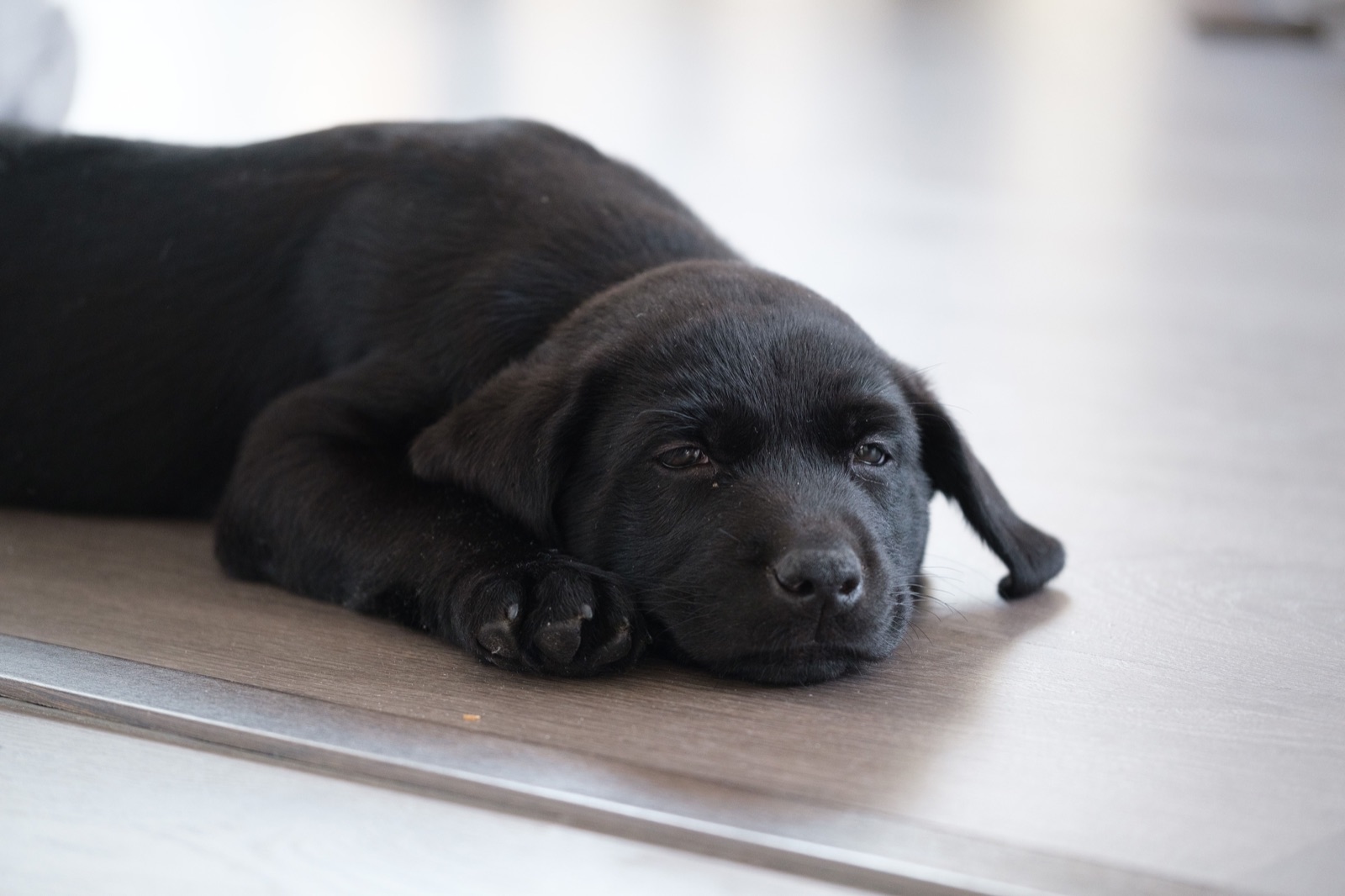
Crate training a Labrador puppy gives you a safe place to put a curious, chewing puppy when you can't watch it, and gives the puppy a quiet den of its own. Done well, your Lab walks into the crate by choice, settles with a chew toy and sleeps through longer stretches at night. This guide takes you through choosing the crate, the step-by-step introduction, building up time, nights, and the mistakes that make puppies hate their crate.
What you'll need
Essentials
-
A crate sized for an adult Lab, with a divider panel
: adult Labs stand 21½ to 24½ inches at the shoulder; the divider keeps the space puppy-sized so it stays clean. -
Food-stuffable chew toys
: a stuffed toy, frozen to last longer, keeps a mouthy Lab busy and makes the crate worth going into. -
Small training treats
: you will toss a lot of them into the crate in the first days.
Optional
-
A washable bed
: add it once your puppy is not having accidents or shredding fabric; Lab puppies are keen chewers. -
A water bowl that fixes to the crate
: aKC suggests providing water in the crate.
Why a crate helps with a Lab puppy
A crate is a management tool, not a place to keep a dog all day. For a Lab puppy it does three jobs:
- House training. AKC calls the crate one of the most effective house-training tools, because dogs generally prefer not to soil their sleeping area. See how to potty train a Lab puppy for the full routine.
- Safety while you are busy. Labs are retrievers that explore with their mouths, so an unsupervised puppy will find cords, shoes and anything left on the floor.
- Rest. Overtired puppies often bite and race around. A crate in a quiet spot helps your puppy get the sleep it needs.
Humane World for Animals puts the limit clearly: "Your dog shouldn't spend most of their time in a crate."
Choose the right crate for a Lab
The crate should be large enough for your puppy to stand up, turn around and lie down comfortably, according to AKC, and no larger, or your puppy may use one end as a bathroom and sleep at the other.
That creates a problem with a fast-growing breed. A Lab puppy coming home at 8 weeks will be an adult of 22½ to 24½ inches at the shoulder and 65 to 80 pounds (males) or 21½ to 23½ inches and 55 to 70 pounds (females), according to the AKC breed standard. Both AKC and Humane World for Animals suggest choosing a crate for the adult size; a divider panel keeps the space small now, and you move it back as your puppy grows. Check the maker's sizing guide for your crate against your puppy's expected adult size.
Humane World lists the common types: plastic crates, fabric crates on a collapsible frame and collapsible metal crates.
Where to put the crate
Start with the crate where the family spends time, so your puppy isn't shut away from everyone. At night, Humane World recommends putting it in your bedroom or a nearby hallway at first, so you hear your puppy if it needs to go out.
Step 1: Introduce the crate
Leave the door open or take it off, and let your puppy explore. Never push your puppy in.
- Sit next to the crate with a handful of treats or kibble.
- Toss a treat inside whenever your puppy comes near the crate. AKC recommends this, and continuing to give treats every 5 to 10 seconds while your puppy stays inside.
- Let your puppy walk in and out freely. Humane World says this stage can take anywhere from a few minutes to several days.
- Hide a few treats near the back of the crate when your puppy isn't looking, so it discovers that good things turn up in there.
Do this when your puppy is calm or sleepy, as AKC suggests, not in the middle of a wild play session.
Step 2: Feed meals in the crate
Food is the best motivator for most Labs, so use it.
- Put the food bowl near the crate, then move it a little further inside at each meal until it sits at the back.
- Once your puppy eats inside without worry, close the door during the meal. Open it as soon as your puppy finishes.
- At each meal, leave the door closed a few minutes longer, until your puppy stays calmly inside for about 10 minutes after eating.
Humane World notes that if your puppy whines to be let out, you have probably increased the time too quickly. Go back to a shorter time.
Step 3: Build up time with the door closed
Now teach your puppy to rest in the crate while you are nearby, then while you are out of sight.
- Pick a cue such as "crate", point inside, toss a treat in and close the door when your puppy enters.
- Sit quietly near the crate for 5 to 10 minutes, then go into another room for a few minutes. Come back, sit for a short time and let your puppy out.
- Repeat several times a day, gradually adding to the time you are out of sight.
- Aim for about 30 minutes with your puppy calm in the crate and you mostly out of view. Humane World suggests reaching this point before you leave your puppy crated while you are out or overnight.
Each time, give your puppy a food-stuffed chew toy. AKC suggests freezing it so it lasts longer, and a long chew keeps a Lab's busy mouth on something you want it to chew. Take your puppy's collar off before crating, as AKC advises, and make sure potty and exercise needs are met first.

Step 4: Crate your puppy when you leave
Once your puppy stays calm for about 30 minutes, you can start crating it for short absences.
- Crate your puppy 5 to 20 minutes before you leave, as Humane World suggests.
- Keep goodbyes short and matter-of-fact. A big emotional exit makes leaving feel like an event.
- Keep arrivals low-key too. Let your puppy out calmly, and go straight to the potty spot.
- Also crate your puppy for short periods while you are home, so the crate doesn't always mean being left alone.
How long a Lab puppy can stay in the crate
Humane World for Animals says puppies under 6 months shouldn't stay in a crate for more than three or four hours at a time, because they can't control their bladders or bowels for that long. Its general guideline is no more than the puppy's age in months plus one hour, and for adult dogs no more than four to five hours during the day. AKC adds that you should never crate a dog longer than it is comfortable or can hold its bladder.
If your day is longer than that, arrange a dog walker, a pet sitter or daycare.
Crate training a Lab puppy at night
Nights go most smoothly when you plan for them.
- Take your puppy to the potty spot last thing before bed.
- Keep the crate near your bed for the first weeks, as Humane World recommends, so you hear your puppy wake.
- Expect at least one night trip with a young puppy. Use the outdoor cue, go straight to the potty spot on a leash, keep it short and calm, and go back to the crate. This is not playtime.
- Move the crate gradually to its long-term spot once your puppy sleeps well with it nearby.
When your puppy cries in the crate
First decide whether your puppy needs to go out. Humane World suggests that if whining continues for several minutes, you use your outdoor cue; if your puppy responds and gets excited, take it out for a short, purposeful trip. If it doesn't need to go, wait quietly until it stops. Never punish your puppy for whining.
AKC adds a useful distinction: crying within minutes of going into the crate usually points to stress, so slow down the introduction. Crying after your puppy has been settled for a while is more likely boredom, hunger or a need to go out.
Signs to stop and get help
AKC warns never to crate a dog if it causes stress or panic. Pacing, shaking, scratching or biting at the door, long bouts of howling or barking, and drooling are warning signs. A dog with separation anxiety can hurt itself trying to escape. Humane World notes that a crate will not fix separation anxiety, which needs counterconditioning and desensitization, so talk to your vet or an animal behavior professional.
Common crate training mistakes
- Using the crate as punishment. Humane World says crates "should never be used for punishment". A calm rest for an overexcited puppy is fine; sending a puppy there in anger is not.
- Going too fast. Most crate problems come from adding time faster than the puppy can handle. Step back and rebuild.
- A crate that's too big. Without a divider, a Lab-sized crate gives a young puppy room for a bathroom corner. Sizes and dividers are covered in choosing a crate for a Labrador.
- Soft bedding too early. AKC suggests waiting on blankets and beds until your puppy doesn't have accidents or shred fabric.
- Letting children reach in. Humane World advises teaching everyone, especially children, to leave the dog alone in its crate.
Next steps
Humane World says you can start crate training as early as 8 weeks old. Pair crate time with a steady potty routine, plenty of chew toys and short play sessions, and read our guide to Lab puppy biting for the busy-mouth stage. For everything else you need before your puppy arrives, see the Lab puppy checklist.
Questions
How long does crate training a Lab puppy take?
Humane World for Animals says crate training can take days or weeks. Moving in small steps is faster than rushing and having to start over.
How long can a Lab puppy stay in a crate?
Humane World for Animals advises that puppies under 6 months should not stay in a crate for more than three or four hours at a time, and gives a guideline of no more than their age in months plus one hour. Never crate a puppy for longer than it can hold its bladder.
What do I do when my Lab puppy cries in the crate at night?
First decide whether your puppy needs to go out. If it might, take it straight to its potty spot on a leash for a short, calm trip and back to the crate; if not, wait quietly until it settles, and never punish it for whining.
How big should the crate be for a Lab puppy?
Big enough for your puppy to stand up, turn around and lie down comfortably, and not much more. Buying a crate for the adult size with a divider lets the space grow with your puppy.
Can I use the crate as a time-out?
A short, calm rest in the crate for an overexcited puppy is fine, but never use the crate as punishment. Humane World for Animals and AKC both stress that the crate should stay a place your dog likes.
Sources
More in Puppy
Buying guide in Gear
Dog crate for a Labrador: what size, which type, and a divider for puppies
Measure your dog, buy for the adult size, and use a divider panel while your Lab is still a puppy.
Guide
How to potty train a Lab puppy: a schedule, rewards and no punishment
Take your puppy out often, reward every success, supervise or confine the rest of the time, and clean up accidents without a fuss.
Checklist
Lab puppy checklist: what to get and do before your Labrador comes home
Supplies, a puppy-proofed house, ID and a vet plan, sorted into what you need on day one and what can wait.