Guide
Black Labrador, yellow and chocolate: the three Lab colors and how they are inherited
Three colors, two genes and a lot of myths: what a Lab's coat color tells you, and what it doesn't.
Published

A black Labrador, a yellow Lab and a chocolate Lab are the same breed, built to the same standard. Coat color is decided by two genes, and once you know how they work you can read a litter, understand why two black parents can have a yellow puppy, and see through the claims made about "rare" colors. This guide covers the three recognized colors, the genetics in plain terms, the dilute colors sold as silver, charcoal and champagne, and what the evidence says about color and temperament.
Black Labrador, yellow and chocolate: the three standard colors
The AKC breed standard is short on this point: Labrador coat colors are black, yellow and chocolate, and "any other color or a combination of colors is a disqualification" in the show ring. A small white spot on the chest is allowed but not desirable. The UK standard says the same in other words: the only correct colors are "wholly black, yellow and liver/chocolate."
It was not always three. According to the UC Davis Veterinary Genetics Laboratory, solid black was the accepted color of the original Labrador, and the occasional yellow or chocolate puppy was usually culled. The first recognized yellow Labrador was born in 1899, and chocolate became more accepted in the 1930s.
Black Labrador
A black Lab is all black. The standard disqualifies a black with brindle or tan markings, and it asks for a black nose, black eye rims and brown eyes. Black is the most common color in practice: in a UK study of more than 33,000 Labradors seen by vets, 44.6% were black, 27.8% yellow and 23.8% chocolate.
Yellow Labrador, from light cream to fox red
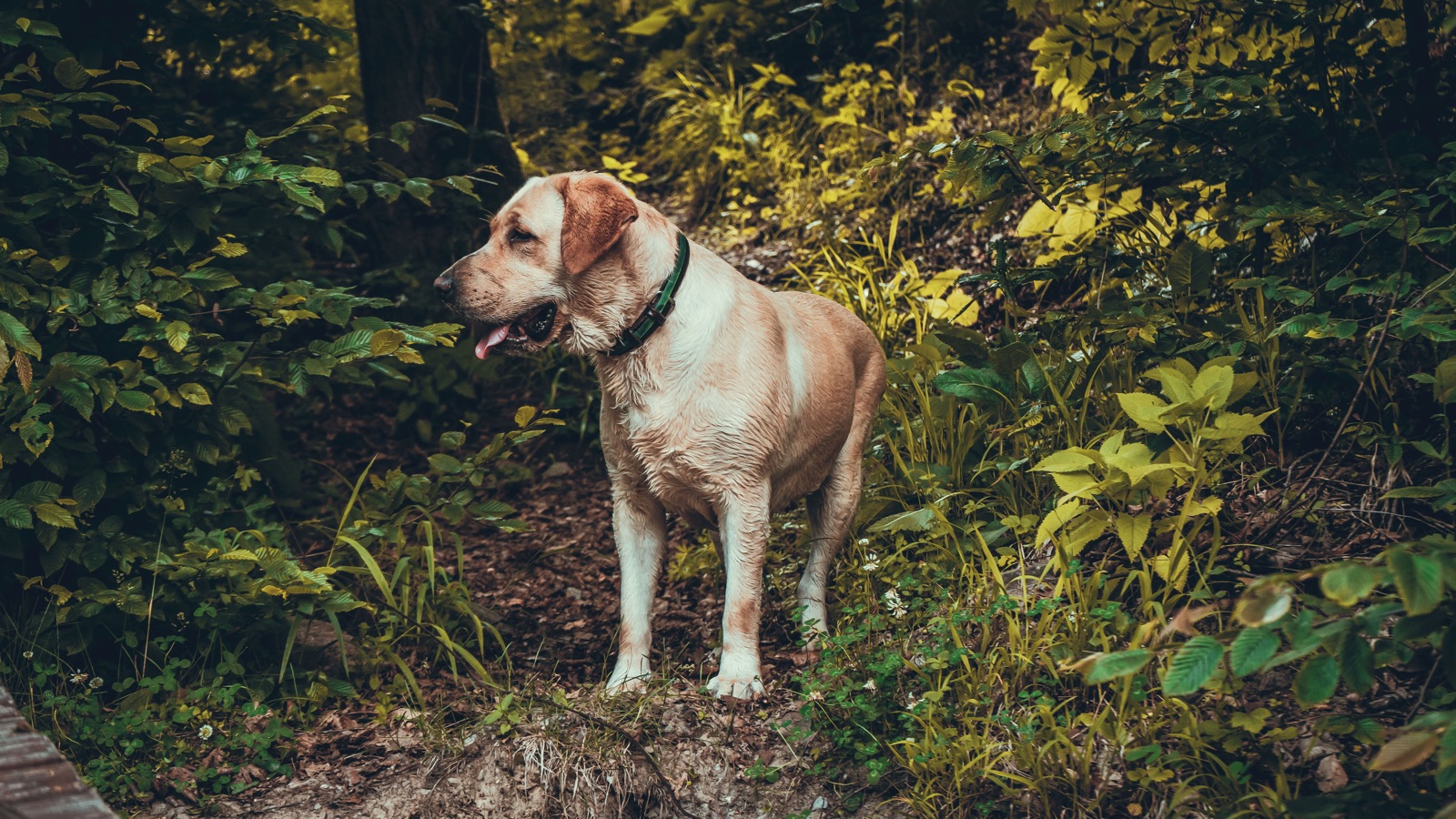
A yellow Lab can be almost white, deep fox red, or anything between. The AKC standard says yellows "may range in color from fox-red to light cream," with shading on the ears, back and underparts. So a fox red Lab is a yellow Lab, and so is the pale dog some sellers call "white." Black and yellow Labs both should have brown eyes, and the nose should be black, though a nose that fades to a lighter shade is not a fault.

Chocolate Labrador
Chocolates "can vary in shade from light to dark chocolate," and the nose and eye rims are brown rather than black. Eyes can be brown or hazel. Chocolate with brindle or tan markings is a disqualification, the same as for black. If you are searching for a "brown Lab dog," this is the color you mean: brown and liver are other names for chocolate.

How Labrador color is inherited
Every puppy gets one copy of each gene from each parent. Two genes do most of the work in Labradors, and the AKC's DNA guidance for the breed lays them out.
Gene one: E decides yellow or not
The E gene decides whether the coat can show dark pigment at all. A Lab with two copies of the recessive version (written e/e) is yellow, whatever it carries at the second gene. A Lab with at least one dominant E can show black or chocolate.
Gene two: B decides black or chocolate
The B gene decides whether that dark pigment is black or brown. One dominant B is enough for black. A chocolate Lab needs two copies of the recessive b (b/b) and at least one E. That is why the AKC page describes chocolate Labs as "essentially lighter variations of black."
What two parents can produce
Because both versions are recessive, a dog can carry yellow or chocolate without showing it. The table follows directly from the two genes above.
| Parents | Possible puppy colors | Why |
|---|---|---|
| Black × black | Black, yellow, chocolate | Either parent can carry hidden e or b |
| Yellow × yellow | Yellow only | Both parents are e/e, so every puppy is e/e |
| Chocolate × chocolate | Chocolate or yellow, never black | Both are b/b; yellow appears if both carry e |
| Black × yellow | Black, yellow, chocolate | Depends on what each parent carries |
| Black × chocolate | Black, yellow, chocolate | Chocolate appears only if the black parent carries b |
A DNA test tells you what a breeding dog carries. Without one, the litter itself is the evidence: a chocolate puppy from two black parents proves both carry b.
Why a yellow Lab can have a brown nose
The B gene still acts on the skin of a yellow dog. The AKC notes that yellow Labs with two copies of b have brown noses and paw pads instead of black. That dog is yellow by the E gene and carries the chocolate pair at the B gene. The AKC also notes that other genes can modify the color you actually see, which helps explain why yellows range so widely.
Silver, charcoal and champagne: the dilute colors
A third gene, D, can lighten the coat. The UK's Royal Kennel Club explains that a dog needs two copies of the dilute variant (d) to show it, while dogs with one copy are carriers. Dilution turns black into charcoal, chocolate into silver, and yellow into champagne, which the club notes can be easily confused with an ordinary yellow.
Where the breed's official bodies stand:
- The AKC standard disqualifies any color other than black, yellow or chocolate.
- The Royal Kennel Club calls charcoal, silver and champagne "non-breed standard colours." Since 2023 it publishes DNA results only for Labradors that are clear of the dilute variant, and it requires the test for imported Labradors being registered.
- The AKC's DNA page lists the D locus test among those recommended by the Labrador Retriever Club, the AKC parent club for the breed.
The Royal Kennel Club set up its reporting scheme after consulting the UK's Labrador Breed Council and a working party on non-breed-standard colors. How the dilute gene came into the breed, and whether dilute dogs should be treated as purebred Labradors, is still disputed. If a seller offers a silver or charcoal puppy, ask for both parents' DNA results and registration papers before you decide.
Color and temperament: what the evidence says
You will hear that black Labs are the calm workers, yellows are the family dogs and chocolates are the wild ones. Two studies give the closest thing to evidence:
- A 2014 survey of owners of 1,978 UK Labradors found chocolate dogs scored, on average, as more excitable and more agitated when ignored than black dogs, and lower on trainability and on noise fear than black and yellow dogs. The same study found the dog's working status was linked to personality differences more often than any other factor, and gundogs scored higher on trainability than show dogs and pets.
- A 2017 genomic study of UK Labradors found genetic differences within the breed linked both to the dog's role (working, pet or show) and to its coat color.
Put together, color and breeding line travel together in the breed, so an average difference between colors can come from the lines the dogs come from, from how they are raised, or both. The differences are group averages from owner reports. They do not predict what one puppy will be like. For that, look at the parents and the line, and read our guide to Labrador temperament.
Do chocolate Labs live shorter lives?
The same UK veterinary records study reported a median lifespan of 10.7 years for chocolate Labs against 12.1 years for other colors, and more ear inflammation (otitis externa) recorded in chocolates: 23.4%, against 17.0% in yellows and 12.8% in blacks. The lifespan figure came from the few dogs whose deaths were recorded during the study: 34 chocolates and 139 dogs of other colors. The study did not show that color itself causes the difference; the authors suggest that breeding from a narrower set of lines to get chocolate puppies may play a part. It is a reason to keep up with ear checks and vet visits for any Lab, not a reason to avoid a color. The health section covers the breed's common problems.
Names you will see for Lab colors
Search results and puppy ads use many names for the same three colors:
- Golden Labrador: a yellow Lab. The AKC notes there is no breed called the "Golden Lab"; the Golden Retriever is a separate breed. Our Labrador vs Golden Retriever comparison shows how to tell them apart.
- White or cream Labrador: a pale yellow Lab.
- Fox red or red Labrador: a dark yellow Lab.
- Brown or liver Labrador: a chocolate Lab.
- English or American black Lab: color says nothing about type. Both show and field Labs come in all three colors; see English vs American Labradors.
A black Lab is not a separate breed either; the AKC lists that among common misconceptions.
Choosing a color
Pick the color you like, then choose the puppy on everything else. The breed standard asks the same of every color: the same short, dense, weather-resistant coat with a soft undercoat, the same height and the same 55 to 80 pounds in working condition described in our guide to Labrador size. Whatever the color, you are getting a double-coated dog that sheds.
What matters more than color:
- The parents. Meet them if you can. Temperament and build come from the line.
- Health testing. Ask what the parents were screened for; the health section explains the common tests.
- Honest color claims. Be wary of a "rare" color sold at a higher price. The three standard colors are not rare, and dilute colors fall outside the standard.
Questions
What are the three Labrador colors?
The AKC breed standard recognizes black, yellow and chocolate. Yellow covers everything from light cream to fox red, and chocolate runs from light to dark brown. Any other color or a mix of colors is a disqualification in the show ring.
Is a fox red Labrador a separate color?
No. Under the AKC standard fox red is the darkest shade of yellow, so a fox red Lab is a yellow Labrador. Genetically it is still a yellow dog; the depth of the red is shaped by other genes.
Can two black Labradors have yellow or chocolate puppies?
Yes. A black Lab can carry hidden copies of the yellow and chocolate versions of the color genes. If both parents carry the same hidden version, some puppies can show it.
Is a golden Labrador the same as a Golden Retriever?
No. A golden or yellow Labrador is a Labrador Retriever with a yellow coat. The Golden Retriever is a separate breed with a longer, feathered coat, and the AKC notes there is no breed called the Golden Lab.
Are silver Labradors purebred?
Silver, charcoal and champagne come from a dilute gene. The UK's Royal Kennel Club calls these non-breed-standard colors, and the AKC standard disqualifies colors other than black, yellow and chocolate. Whether such dogs are purebred is disputed, so ask a breeder for DNA and pedigree records.
Do chocolate Labs have a different temperament?
One large owner survey of UK Labradors found chocolate dogs scored, on average, as more excitable and less trainable than black dogs. These were group averages, and the dog's working background was linked to personality more often than color, so color tells you little about one puppy.
Sources
- American Kennel Club — Labrador Retriever breed page
- American Kennel Club — Official Standard for the Labrador Retriever (approved 1994)
- American Kennel Club — Labrador Retriever DNA tests (coat color loci)
- American Kennel Club — Golden Retriever vs. Labrador Retriever: Similarities and Differences
- The Royal Kennel Club — Retriever (Labrador) breed standard
- The Royal Kennel Club — Coat colour DNA test: dilute (d1 variant)
- The Royal Kennel Club — New DNA testing scheme for Labrador Retrievers (January 2023)
- UC Davis Veterinary Genetics Laboratory — Genetic Diversity Testing for Labrador Retrievers
- McGreevy et al. (2018), Labrador retrievers under primary veterinary care in the UK: demography, mortality and disorders. Canine Genetics and Epidemiology
- Lofgren et al. (2014), Management and personality in Labrador Retriever dogs. Applied Animal Behaviour Science 156
- Wiener et al. (2017), Genomic data illuminates demography, genetic structure and selection of a popular dog breed. BMC Genomics
More in Breed

Guide in Health
Labrador lifespan: how long Labs live and what you can influence
Many Labs live into their early teens. Studies show what tends to shorten that, and a few things you control make a measurable difference.

Comparison
English vs American Labrador: show and field types of one breed
Not two breeds but two breeding goals: a show ring Lab and a field Lab, measured against the same standard.
Guide
Labrador size: height, weight and growth of males and females
How tall and heavy a full grown Labrador should be, how fast a puppy gets there, and why there is no such thing as a standard mini Lab.