Comparison
Labrador vs Golden Retriever: coat, size, energy and temperament compared
Similar size, similar kindness, different coats and different jobs: how to tell the two retrievers apart and which suits your home.
Published
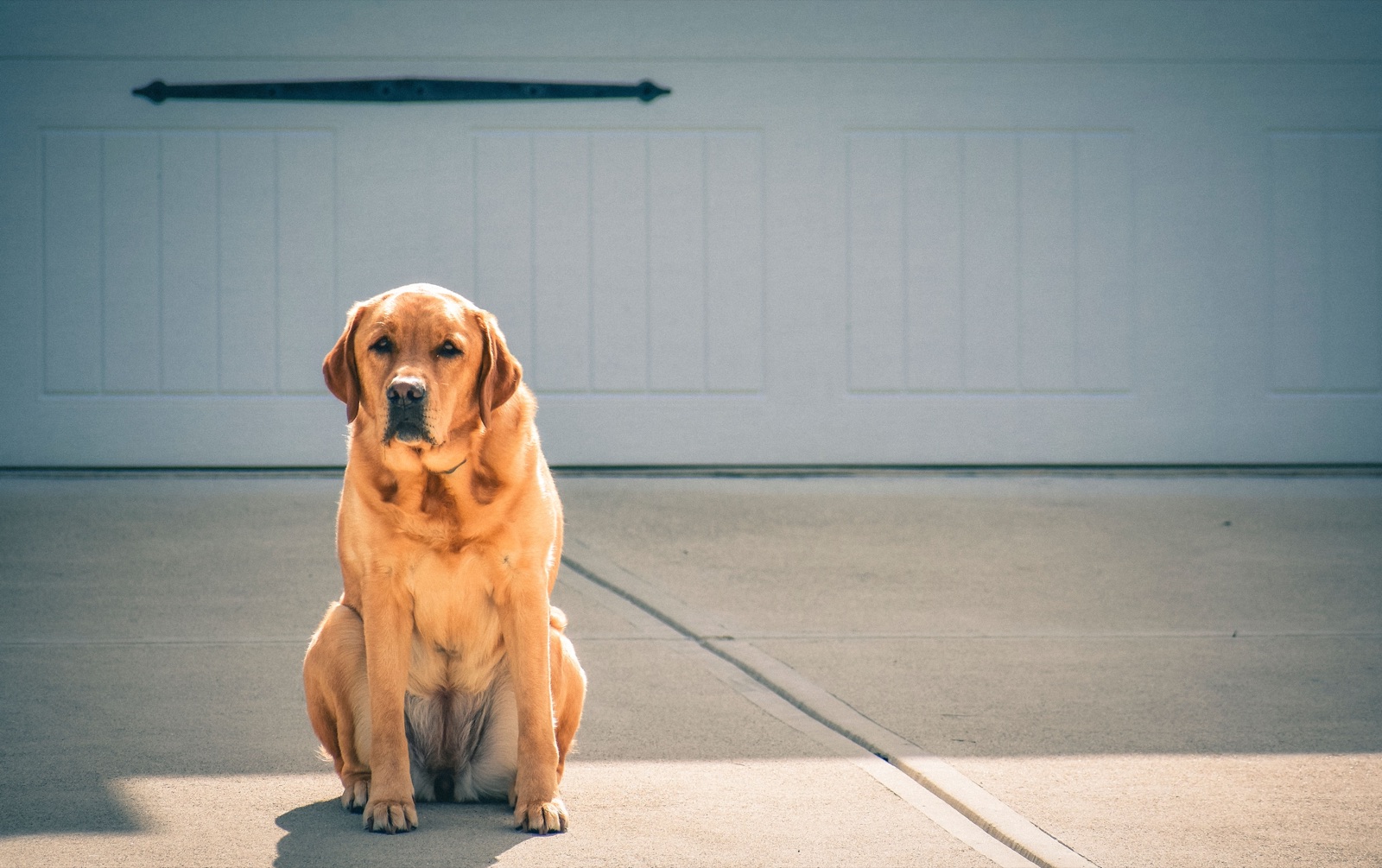
Labrador vs Golden Retriever comes down to coat, energy and a few habits more than size or kindness. Both are friendly, trainable sporting retrievers of about the same height and weight, and the AKC ranks them second and third in popularity. The Labrador has a short, hard coat, more raw energy and a habit of acting first and thinking later. The Golden has a long, feathered coat that needs more brushing, a lower energy rating and, in the words of a breed expert quoted by the AKC, a more "clingy" attachment to its people.
Labrador vs Golden Retriever at a glance
| Labrador Retriever | Golden Retriever | |
|---|---|---|
| Origin | Water dogs of Newfoundland, refined in Britain | Scottish Highlands, 1840–1890 |
| Developed mainly for | Retrieving from water | Upland game |
| Height (AKC) | Males 22.5–24.5 in, females 21.5–23.5 in | Males 23–24 in, females 21.5–22.5 in |
| Weight (AKC) | Males 65–80 lb, females 55–70 lb | Males 65–75 lb, females 55–65 lb |
| Life expectancy (AKC) | 11–13 years | 10–12 years |
| Coat | Short, straight, very dense, hard to the touch | Longer, firm outer coat with feathering |
| Colors | Black, yellow, chocolate | Golden, in various shades |
| Shedding (AKC rating) | 4 of 5 | 4 of 5 |
| Energy (AKC rating) | 5 of 5 | 3 of 5 |
| Barking (AKC rating) | 3 of 5 | 1 of 5 |
| Trainability (AKC rating) | 5 of 5 | 5 of 5 |
| Good with young children (AKC rating) | 5 of 5 | 5 of 5 |
The ratings come from each breed's AKC page; they describe the breed in general, not every dog.
What the two breeds share
The AKC's comparison lists more similarities than differences. Both are hunting retrievers with heads built to carry game birds. Both are sociable, trainable and gentle with people, and usually get along with other dogs. Both are active breeds that need mental and physical exercise from puppyhood and do best living indoors as part of the family. And both shed all year, heavily in spring: a Lab's short coat is not a low-shedding coat.
Their breed standards ask for nearly the same character. The Labrador's calls for "a kindly, outgoing, tractable nature; eager to please and non-aggressive towards man or animal." The Golden's asks for a dog that is "friendly, reliable, and trustworthy."
The Labrador Retriever
The Labrador descends from the water dogs of Newfoundland that worked beside fishermen, and British breeders refined it in the second half of the 1800s. The AKC notes that its short, dense, weather-resistant coat was preferred because long-haired retrievers came out of Canadian winter water encrusted with ice. That history shows today:
- Coat. Short, straight and very dense over a soft, weather-resistant undercoat. The AKC grooming advice for Labs is occasional baths plus regular nail trims and tooth brushing.
- Build. The AKC comparison says Labs look heavier than Goldens because of denser bone, a deeper chest and a rounder ribcage.
- Energy. The AKC calls the Lab "an exuberant, very energetic breed that needs lots of exercise every day," and warns that a Lab without it is likely to become hyperactive or destructive.
- Training style. In the AKC comparison, Labs dislike repetition and tend to "just go for it," and an untrained Lab is harder for the public to deal with than an untrained Golden. Plan on short, varied sessions and early manners. The training section covers the basics.
The Golden Retriever

The Golden was developed by the first Lord Tweedmouth on his Guisachan estate in the Scottish Highlands, where he kept breeding records from 1840 to 1890. He crossed a yellow retriever with the now-extinct Tweed Water Spaniel to suit the rain and rough ground there.
- Coat. A dense, water-repellent coat with a firm outer layer that can be straight or wavy, with feathering on the legs, underbody, neck, thighs and tail. The AKC recommends brushing once or twice a week, daily in heavy shedding, and checking the ears weekly.
- Build. Similar height to the Lab, with a top weight 5 pounds lower in males in the AKC ranges.
- Energy. The AKC says Goldens need plenty of daily exercise and make good companions on long runs, but rates their energy one step lower than the Lab's.
- Training style. The breed experts in the AKC comparison say Goldens love repetition and tend to think a situation through before acting, and one calls them more "clingy" than Labs.
How to tell a yellow Lab from a Golden
Coat and tail settle it. A yellow Lab has short, hard hair lying close all over and a thick, tapering "otter" tail. A Golden has longer hair, a ruff at the neck and feathering behind the legs and under the tail. Color does not settle it: the Golden standard allows "various shades" of gold, and yellow Labs run from light cream to fox red, so the two overlap. Our guide to Labrador colors explains why a "golden Labrador" is a yellow Lab, not a Golden.
Which to choose
Choose a Labrador if
- You want a short coat that needs occasional baths rather than regular brushing of long feathering, and you accept that it still sheds.
- You have time for a lot of daily exercise: swimming, retrieving, long walks, dog sports.
- You enjoy an outgoing, bouncy dog and will put in early training to shape that energy.
Choose a Golden Retriever if
- You are happy to brush a long coat once or twice a week, more in shedding season.
- You want a dog that likes to stay close and tolerates repetitive training.
- You prefer a lower energy rating, while still planning on daily exercise.
Either breed, if you check the line
Both breeds have split into show and field types. A Swedish study of more than 2,500 dogs found that pet and show-type dogs and field-type dogs behaved differently in both breeds, and not always in the same direction. Type can matter as much as breed, so ask about the parents. Our English vs American Labrador guide explains the Lab side of that split.
Health screening to ask about
The AKC advises that responsible Lab breeders screen for hip and elbow dysplasia, heart disorders, hereditary myopathy and eye conditions, and test for exercise induced collapse. For Goldens it lists hips and elbows, eye conditions such as juvenile cataracts, pigmentary uveitis and progressive retinal atrophy, and heart disease including subvalvular aortic stenosis. Ask to see results for both parents, and see the health section for what they mean. Crosses of the two breeds and the other retriever breeds have their own retrievers section.
Questions
What is the difference between a Golden Retriever and a Labrador?
They are separate breeds. The Labrador has a short, dense coat in black, yellow or chocolate and was developed mainly as a water retriever; the Golden has a longer, feathered golden coat and was developed mainly for upland game. Labs are rated higher for energy by the AKC.
Are Golden Retrievers Labradors?
No. Both are retrievers in the AKC Sporting Group, but the Golden Retriever was developed in the Scottish Highlands and the Labrador descends from water dogs of Newfoundland. A yellow Lab is still a Labrador, not a Golden.
Yellow Labrador vs Golden Retriever: how do I tell them apart?
Look at the coat and tail. A yellow Lab has a short, hard coat and a thick, tapering otter tail; a Golden has longer hair with feathering on the legs, chest, belly and tail.
Which sheds more, a Lab or a Golden?
Both shed all year and heavily in spring, and the AKC rates both breeds 4 out of 5 for shedding. The Golden's longer coat needs more brushing to manage it.
What is a Golden Retriever x Labrador cross?
A cross between the two breeds, sometimes sold as a Goldador. It is a mix of two breeds rather than a breed of its own, and a puppy can take after either parent.
Which is easier to train, a Lab or a Golden?
The AKC rates both breeds 5 out of 5 for trainability. Its comparison notes that Goldens tolerate repetition better, while Labs tend to act first, so keep sessions short and varied for a Lab.
Sources
- American Kennel Club — Golden Retriever vs. Labrador Retriever: Similarities and Differences (updated January 2026)
- American Kennel Club — Labrador Retriever breed page
- American Kennel Club — Golden Retriever breed page
- American Kennel Club — Official Standard for the Labrador Retriever
- American Kennel Club — Official Standard for the Golden Retriever
- Sundman et al. (2016), Similar recent selection criteria associated with different behavioural effects in two dog breeds. Genes, Brain and Behavior
More in Breed
Comparison
English vs American Labrador: show and field types of one breed
Not two breeds but two breeding goals: a show ring Lab and a field Lab, measured against the same standard.
Guide in Grooming
Labrador shedding: why Labs shed, when it peaks and what helps
Labs shed all year and heavily twice a year. You can't stop it, but the right brushing routine keeps most of the hair off your floor.
Guide in Training
Labrador temperament: what a Lab's personality is really like
Kind, outgoing and built for work: the Lab personality in the breed standard, what research adds, and what it means at home.