Buying guide
Best toys for a Labrador: retrieving, puzzle, tug, water and chew toys
Labs were bred to carry things in their mouths. Pick toys by job, size them for a big mouth, and put the risky ones away after play.
Published
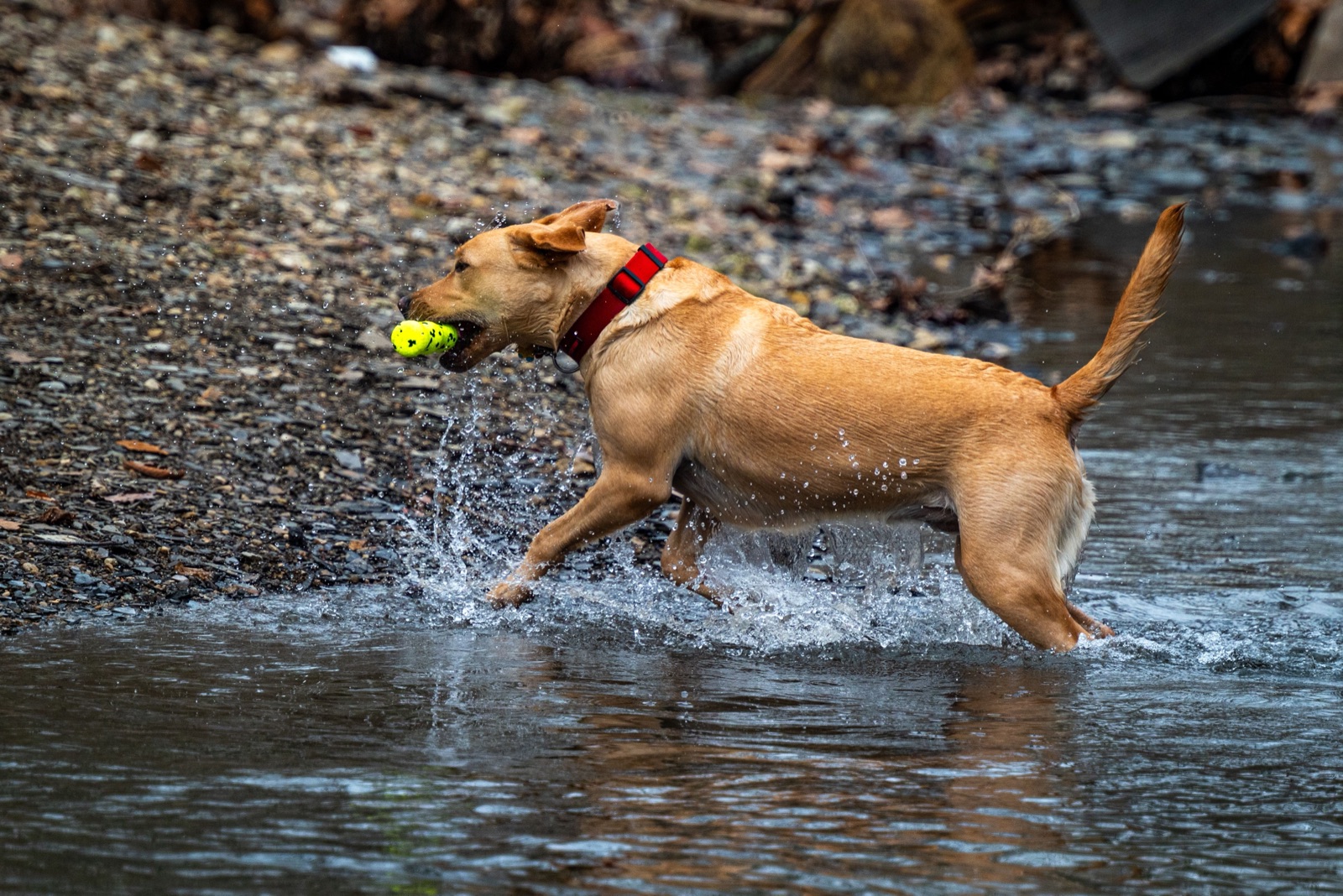
The best toys for a Labrador are the ones that give the dog a job. Labs were bred to retrieve, they carry things in their mouths all day, and their jaws are strong enough to destroy a flimsy toy in minutes. This guide sorts dog toys for Labs into five types, compares them in one table, and shows what to check for size and safety, with notes for Lab puppies.
What toys do for a Lab
A Lab with nothing to do finds something: a shoe, a cushion, the TV remote. Toys give that energy a target. The AKC's toy guide matches toys to what a dog likes to do: chase, work for food, tug, chew, or carry a soft toy around. A Lab usually wants most of these.
The AKC also cites a study on Labrador Retrievers that found dogs lost interest in new toys once they became familiar. That is why rotation matters (see the care section below).
Types of toys for Labradors
Retrieving toys
Balls, flying discs and bumpers are the core of a Lab's toy box. The AKC notes that all types of retrievers especially enjoy chasing a disc, which makes a dog-safe disc a natural "labrador frisbee". For balls, it suggests rubber over standard tennis balls because rubber lasts longer, and brightly colored balls so you can find them in the grass.
About the classic black Lab with tennis balls: the AKC's toy shopping guide warns that tennis balls can cause abrasion to tooth enamel and can be "popped" and pieces swallowed. Use them for fetch, then put them away.

Puzzle and food toys
Puzzle toys for Labs turn a meal or a few treats into a task. The AKC says treat-dispensing and puzzle toys make dogs work for their reward, which gives them mental stimulation. If your Lab bolts its food, a food toy also slows the meal down; Humane World for Animals mentions feeder toys for dogs that eat too quickly.
A hollow rubber toy you can stuff is the simplest version. KONG suggests filling its toys with kibble and a little peanut butter and freezing them for a longer challenge. Count any food in the toy as part of the day's ration so your Lab doesn't gain weight.
Tug toys
Rope and woven tug toys suit a strong, mouthy dog. The AKC's shopping guide says tug toys are best used interactively, with you playing tug with your dog, and then put away so the dog can't shred or eat the toy. Swallowed rope fibers are the risk, so a tug toy is not a toy to leave in the crate.

Water toys
Most Labs will swim after anything you throw. For water, choose toys that float and are easy to see on the surface. The AKC's water safety advice is that flatter toys are better than round ones such as balls, because a dog carrying a flat toy keeps its mouth more closed and takes in less water. Never leave your Lab swimming unattended.
Chew toys
Every Lab needs something it is allowed to chew. Keep it simple here: Cornell's veterinary college says most veterinary dentists suggest you should be able to dent a chew with your fingernail, and the AKC advises chew toys that don't fit all the way into your dog's mouth. Cornell warns that antlers, hooves and bones can break teeth, and the AKC says antlers and other very hard chews are a common cause of broken teeth. Our chew toy guide covers materials, sizes and vet dental advice in detail.
Comparison table
| Type | What it does for a Lab | Use it | Main risk |
|---|---|---|---|
| Retrieving (balls, discs, bumpers) | Burns energy, uses the retrieving drive | With you, outdoors | Small balls swallowed; tennis balls wear enamel |
| Puzzle and food toys | Mental work, slows fast eaters | Indoors, alone or with you | Broken pieces if the toy is too weak |
| Tug | Play and impulse control with you | Interactive only | Swallowed rope fibers |
| Water toys | Swimming with a purpose | Supervised swims | Swallowing water with round toys |
| Chew toys | Safe outlet for chewing | Supervised; right size | Tooth fractures from very hard chews |
What to look at before you buy
Size for a big mouth
The AKC says balls should be big enough that your dog can't choke on or swallow them, and Humane World for Animals warns that toys that are too small can be swallowed or get lodged in the throat. KONG's rule of thumb is that the widest part of the toy should be bigger than the back of the dog's mouth. Its weight bands put most adult Labs in Large (30–65 lb) or X-Large (60–90 lb), and it advises sizing up if you are unsure or if your dog is a power chewer.
Material for strong jaws
The AKC's shopping guide notes that some dogs are on a mission to destroy stuffed toys; if yours is one, skip plush. For chewing, the AKC recommends durable toys that won't break into small pieces. KONG, for example, makes its Extreme line from natural rubber and describes it as its strongest formula, for power chewers.
Parts that come off
Humane World for Animals advises avoiding or altering toys with ribbons, strings, eyes or other parts that can be chewed off and swallowed. The AKC adds: don't let your dog pull out and chew a squeaker.
Best dog toys for Lab puppies
A puppy needs the same types in a safer form. The AKC's puppy toy guide recommends durable toys that won't break apart easily, supervision even with familiar toys, and throwing away any toy with rips, tears or deep punctures, because loose foam or stuffing can cause bowel obstructions. A comfort toy can help a puppy settle in its crate; see our crate guide.
Buy sizes for the dog your puppy will be in a few months, not the one in front of you now. A ball that is safe for an 8-week-old can be a choking risk for a 6-month-old Lab.
Which type suits whom
- High-energy young Lab: retrieving toys for daily fetch, plus a food toy for quiet time.
- Lab that eats too fast: puzzle and food toys for part of each meal.
- Lab that loves water: a bright, flat floating toy for supervised swims.
- Lab that destroys everything: natural rubber toys sized up, and no plush or rope left out.
- Older Lab: puzzle toys and gentle retrieves on soft ground.
How to use and care for your Lab's toys
A simple toy routine
Rotate them
Humane World for Animals suggests rotating toys weekly and making only a few available at a time. The AKC says the same: put toys away now and then so they seem new when they come back.
Inspect and replace
Check toys after play. KONG's instruction for its own toys is "supervised use only, inspect toy frequently, remove toy if damaged", and it notes that no dog toy is indestructible. Throw out anything that is breaking into pieces, torn, or chewed down small enough to swallow.
Put the interactive ones away
Tug toys, tennis balls and anything with a squeaker go back in the cupboard when the game ends. Leave only toys sized and built for unsupervised chewing.
For more gear chosen with a Lab's size and jaws in mind, see the gear section, and for daily exercise ideas see the activity section.
Questions
What toys do Labradors like best?
Most Labs love anything they can retrieve and carry: balls, flying discs and floating toys. The AKC notes that retrievers in particular enjoy chasing a disc. Puzzle toys that hold food and tug toys used with you round out the set.
What size ball is safe for a Labrador?
Choose a ball big enough that your dog can't swallow it. KONG's sizing rule is that the widest part of the toy should be bigger than the back of the dog's mouth; its Large size is for dogs of 30–65 lb and X-Large for 60–90 lb.
Are tennis balls bad for Labs?
They are fine for supervised fetch but not for chewing. The AKC says tennis balls can wear tooth enamel and can be popped and pieces swallowed, so put them away after the game and throw out any that are chewed through.
What are good toys for Lab puppies?
Durable toys sized for the adult dog's mouth, a food-dispensing rubber toy and a soft toy for comfort. Supervise play and throw away toys with rips or deep punctures, which the AKC warns can release stuffing that causes blockages.
How many toys should a Lab have out at once?
A few. Humane World for Animals advises rotating toys weekly and keeping only a few out at a time, so each one feels new when it comes back.
Sources
- American Kennel Club — Which dog toys are right for your dog?
- American Kennel Club — A guide to toy shopping for your pup
- American Kennel Club — Choosing the right dog toys and teething toys for your puppy
- American Kennel Club — Remember canine water safety this holiday weekend
- Humane World for Animals — Safe dog toys
- KONG Company — KONG Extreme (sizes and safety)
- Cornell University Riney Canine Health Center — Risks of a fractured tooth
- American Kennel Club — Antlers for dogs: are these treats safe?
More in Gear
Buying guide
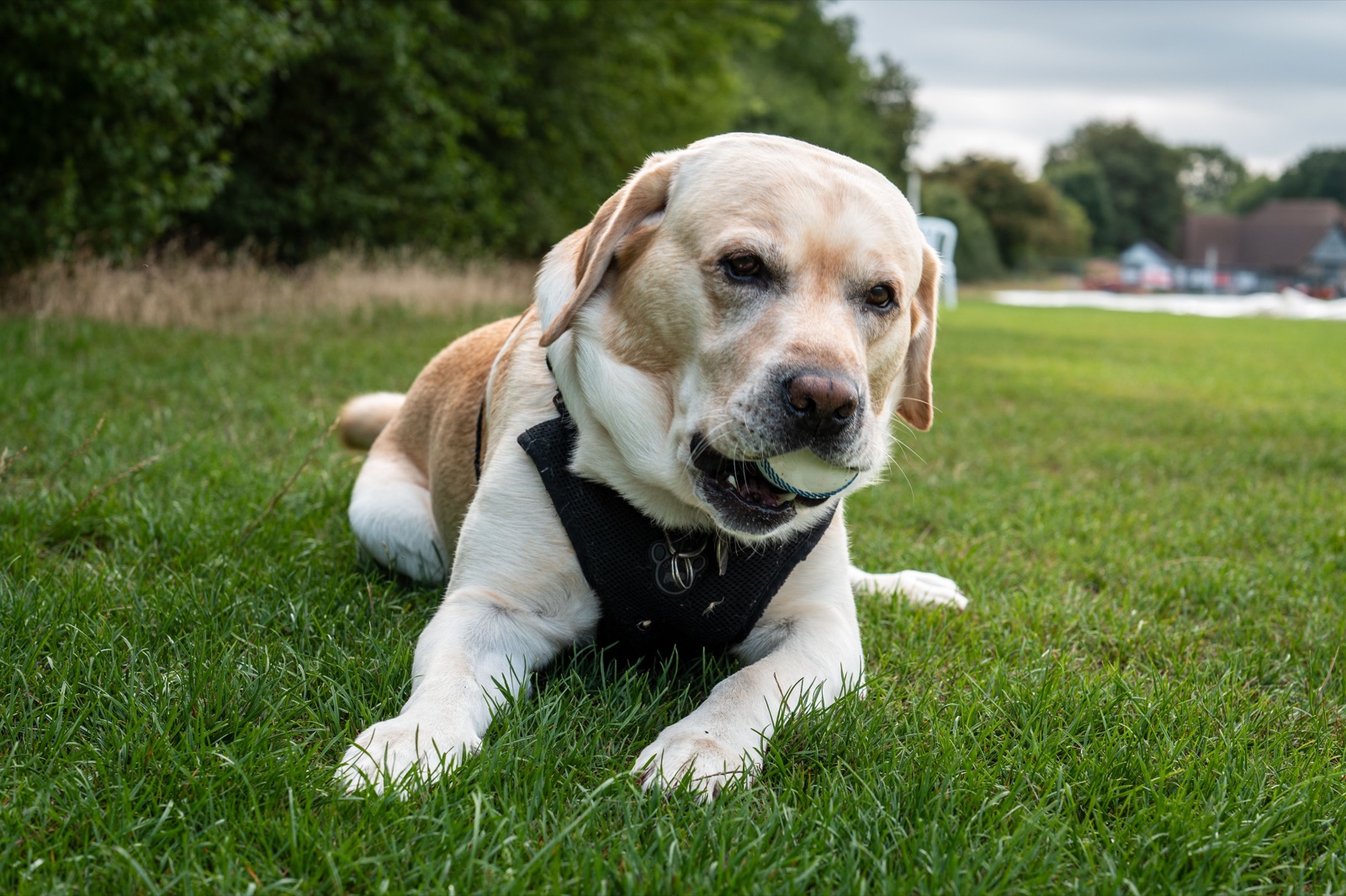
Chew toys for Labs: safe materials, the right size and what vets warn against
A Lab will chew something. Give it a toy that is big enough not to swallow and soft enough not to break a tooth.
Guide in Activity
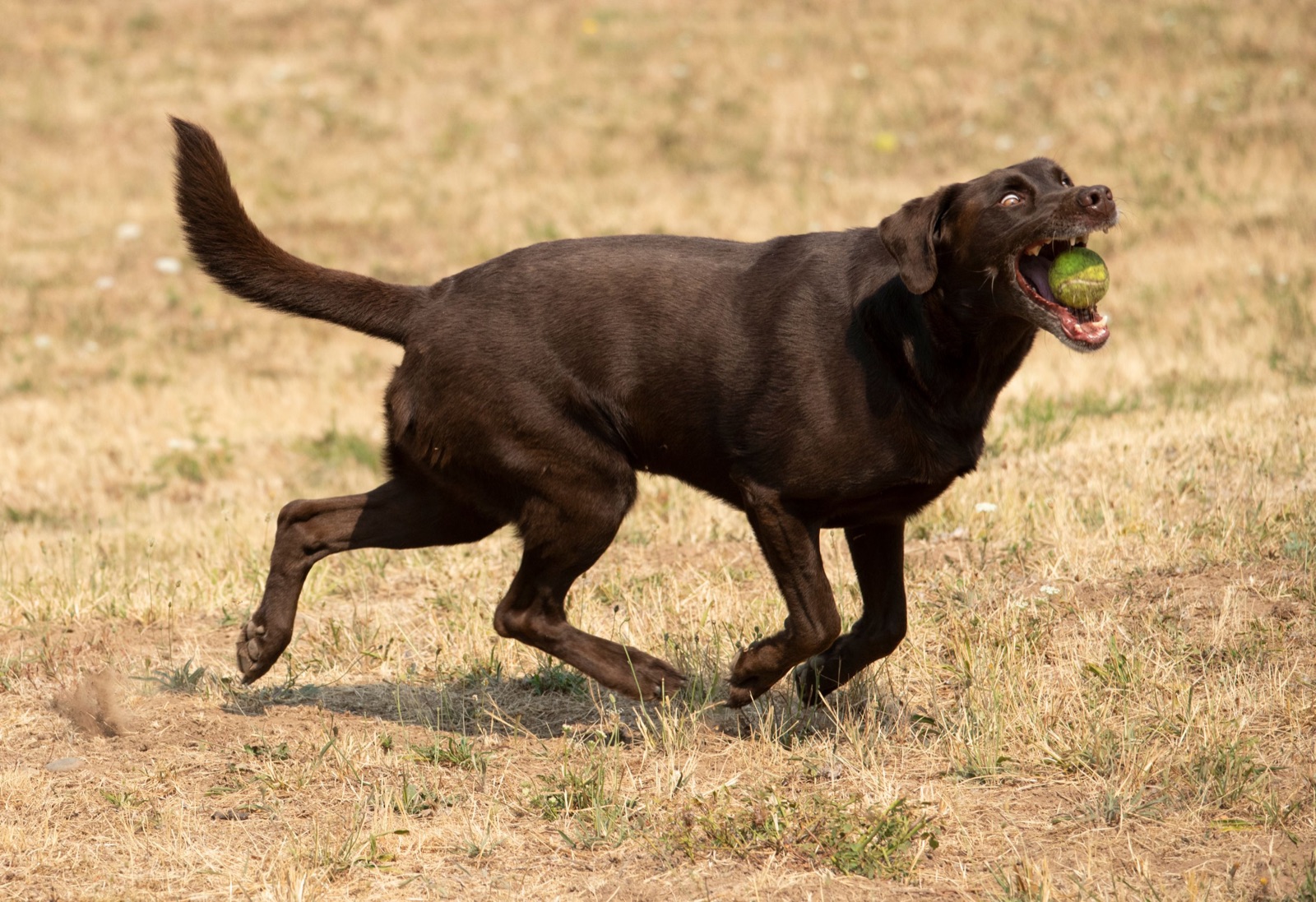
How much exercise does a Lab need? Adults, puppies and seniors
A healthy adult Lab needs a lot of daily exercise, a puppy needs short sessions and plenty of rest, and every Lab needs work for its brain too.
Guide in Puppy
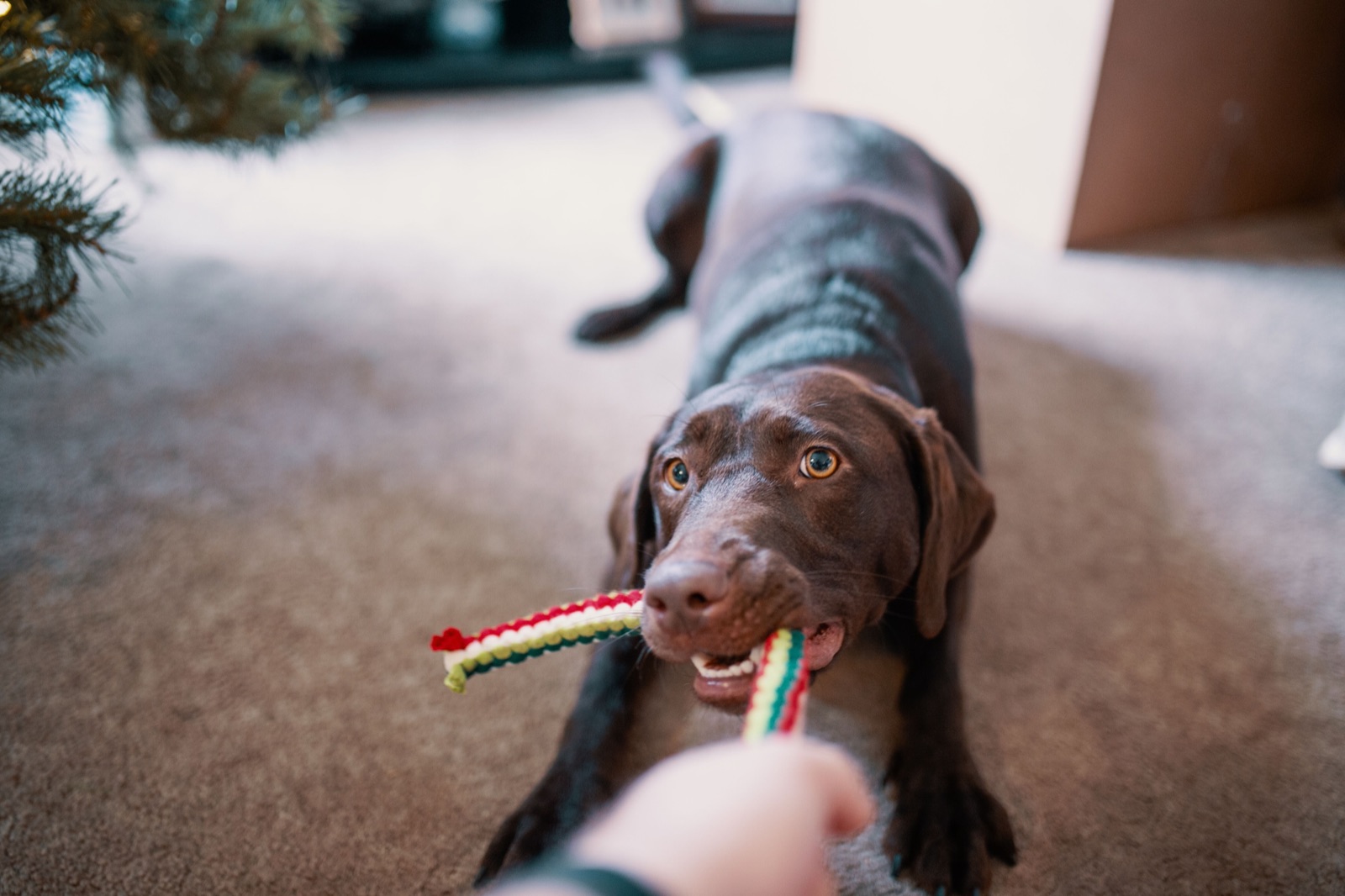
When do Lab puppies stop biting? Teething, mouthing and what to do
Why Labs are so mouthy, how long teething lasts, and calm, reward-based steps that teach your puppy a soft mouth.